Government handbook · original text
Housing
7th edition · rules as of October 2024 · the latest in English. A newer 8th edition ↗ exists in Japanese only.
Reproduced from the Immigration Services Agency, Guidebook on Living and Working, 2025 edition, under the Government of Japan Standard Terms of Use; the PDF is the authoritative version: open the PDF ↗
Our guides for the same procedures
The handbook is the official background, as of October 2024. These guides turn it into current steps, checked against today’s official pages.
- Renting a home in Japan: search, application and contractRent a private home in Japan through a licensed agent, from search to move-in. Expect 4 to 7 months' rent at signing and about 1 to 2 weeks.
- Rental costs in Japan: upfront fees and deposit settlementWhat you pay to rent a private home in Japan, about four to seven months' rent at the start, and how your deposit is settled when you move out.
- Rental guarantors in Japan: companies and other optionsLandlords ask for a rent guarantee company or a joint guarantor. What to do without a guarantor and which papers to prepare for a rental application.
- Moving within Japan: notices, utilities and address changesThe checklist for moving house inside Japan. File at the new municipal office within 14 days of moving in, then update your card, license, car and more.
- Earthquake insurance in Japan: coverage and claimsWhat earthquake insurance covers, how it is added to fire insurance, what a tenant can insure and what it pays for each damage grade.
- Public housing in Japan: eligibility and how to applyApply for prefectural or municipal public housing in a set recruitment period. Each operator sets its own rule for foreign residents and an income limit.
- Eviction in Japan: when a landlord can make you leaveWhen a landlord can refuse to renew or end your lease, what the landlord must do to make you leave, and who to ask for help.
- Gas or electricity problems in Japan: what to checkSmell gas? Stop using it, open the windows and call your gas emergency line (LP gas: your LP gas company). How to reset a gas meter and why the power cuts out.
Ask about housing
Answers from this chapter’s guides and its sources onlyOriginal text, page by page
This is an unofficial HTML reproduction of the official PDF, made by Foreigners in Japan. The PDF is the source: if a table, list or picture looks wrong here, or you need the exact layout, open the original page.
Printed page 123
PDF page 138 ↗Chapter 11 Housing
1 Japanese Housing
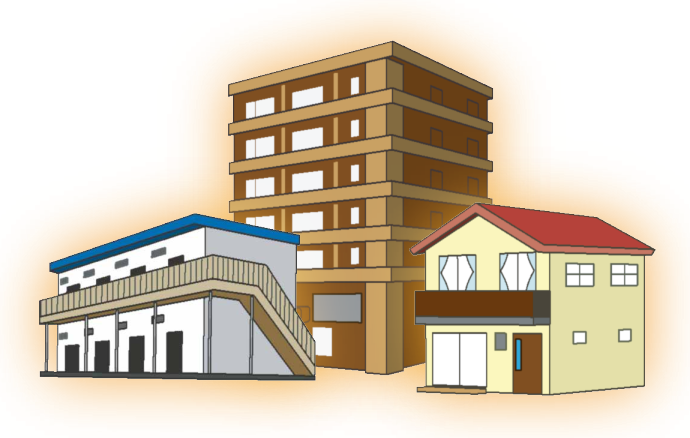
1-1 Privately Owned Housing
Housing which you own is generally called Privately Owned Housing, or mochi-ie in Japanese. Such properties can be detached houses or a condominium. If you want to have your own house built or to purchase one, you will need to go through many procedures.
1-2 Public housing
Public housing is provided by local public entities at affordable rents for low-income persons who need somewhere to live. Requirements such as minimum income vary depending on the prefecture and municipality.
1-3 UR Rental Housing
UR Rental Housing is managed by Urban Renaissance Agency (UR). There is a minimum monthly income requirement set by UR; you for non-Japanese can rent a unit if you meet the status of residence requirement (see 2-2).
1-4 Private Rental Housing
This is the most popular way to rent a place to live in. Anybody can rent a unit by paying rent in accordance with the rental lease agreement. The agreement will vary depending on the housing to rent, so read it carefully before signing a contract.
Printed page 124
PDF page 139 ↗2 Moving-in
2-1 Public housing
• Public housing is provided by local public entities at affordable rents for low-income persons. Requirements such as minimum income vary from prefectures and municipalities.
• In the case of foreign nationals, additional requirements may be imposed regarding the status or period of residence (for example, period of residence must be more than one year) or the resident history in Japan.
• If you wish to live in public housing, apply to the prefecture or municipality in charge.
• For more details about qualifications and application, please ask the prefecture or municipality who administrate the housing you wish to move in.
2-2 UR Rental Housing
• You have to fulfill the requirements set forth by UR such as a minimum monthly income standard.
• In the case of foreign nationals, they will need to reside continuously and have one of the following statuses of residence to be qualified to rent a unit: Diplomat, Official, Special Permanent Resident or Mid to Long-Term Resident (including Permanent Resident).
• Contact UR Sales Office (UR Eigyo Center) for more details on the application and vacancies.
2-3 Private Rental Housing
• ”Apartment Search Guidebook” and “Guide to Looking for a Home” are available for non-Japanese residents who are looking for private rental housing.
• The “Apartment Search Guidebook” includes basic knowledge and useful information:
i. How to search for housing and the process up to signing a contract - general lease procedures lease agreements in Japan differ from those in other countries
ii. Required documents and budget
iii. Moving-in procedures
iv. Rules when living in Japanese housing
v. Moving-out procedures
vi. Useful terms regarding renting a room, etc.

• The “Guide to Looking for a Home” provides basic information which is useful when searching rental housing in Japan and websites of real estate agencies offering services in foreign languages.
Visit the website of the Ministry of Land, Infrastructure, Transport and Tourism for more information.
https://www.mlit.go.jp/jutakukentiku/house/jutakukentiku_house_tk3_000017.html

Printed page 125
PDF page 140 ↗“Apartment Search Guidebook”
JAPANESE

ENGLISH

CHINESE

KOREAN

SPANISH

PORTUGUESE

VIETNAMESE

NEPALI

THAI

INDONESIAN

MYANMAR

KHMER

TAGALOG

MONGOLIAN

Printed page 126
PDF page 141 ↗“Guide to Looking for a Home”
https://www.mlit.go.jp/common/001334734.pdf

Information on rental housing available for foreign nationals
https://safetynet-jutaku.mlit.go.jp/guest/index.php (JAPANESE)