Government handbook · original text
Traffic and transport
7th edition · rules as of October 2024 · the latest in English. A newer 8th edition ↗ exists in Japanese only.
Reproduced from the Immigration Services Agency, Guidebook on Living and Working, 2025 edition, under the Government of Japan Standard Terms of Use; the PDF is the authoritative version: open the PDF ↗
Our guides for the same procedures
The handbook is the official background, as of October 2024. These guides turn it into current steps, checked against today’s official pages.
- Road rules in Japan: driving, cycling and walkingRoad rules in Japan for pedestrians, cyclists, scooter riders and drivers. Vehicles and bicycles keep left. Cyclists aged 16 and over can get blue tickets.
- Getting a Japanese driver's license: school and test routesGet a Japanese driver's license at your prefectural police license center, through a designated driving school or by taking every test directly.
- Converting a foreign driver's license in Japan: stepsConvert a valid foreign driver's license at your prefectural license center. You can drive on an International Driving Permit for at most one year from landing.
- Boat and jet ski licenses in Japan: how to applyGet a small boat or jet ski license as a foreign resident. Exam fees ¥26,400 to ¥35,450. Apply within one year of passing. The license lasts five years.
- New or used car in Japan: prices, checks and buyer rightsHow a new and a used car differ in Japan, what a used car's price board must show, the checks that protect you and your rights if it is faulty.
- Buying a car from a dealer in Japan: documents and contractBuy a car from a dealer in Japan: documents, the quote, payment and delivery. Signing alone does not bind you, and there is no cooling-off.
- Car ownership in Japan: shaken, insurance, parking and taxGet a parking space, register the car, take compulsory insurance, pass the shaken and pay the yearly tax. Changes must be registered within 15 days.
- Traffic accidents in Japan: immediate steps and insuranceAfter a traffic accident, stop, help the injured and report to the police on 110. Then get the accident certificate for compulsory insurance injury claims.Urgent
- Bicycles in Japan: registration, insurance and parkingRegister your bicycle for crime prevention at a shop, check your prefecture's insurance rule, park without removal, and deal with a blue ticket.
- Renewing a Japanese driver's license: dates and documentsRenew your Japanese driver's license in person at your prefectural police license center within the renewal period around your birthday.
Ask about traffic and transport
Answers from this chapter’s guides and its sources onlyOriginal text, page by page
This is an unofficial HTML reproduction of the official PDF, made by Foreigners in Japan. The PDF is the source: if a table, list or picture looks wrong here, or you need the exact layout, open the original page.
Printed page 98
PDF page 113 ↗Chapter 9 Traffic
1 Traffic rules
As members of society, we are all obligated to obey traffic rules to ensure the safe and smooth movement of the many vehicles and pedestrians using our streets.
1-1 Safety guidelines for pedestrians
(1) Walking on roads and sidewalk
Generally, pedestrians shuold walk on the right side of the street so that vehicles approach on their left.
• Pedestrians should keep to the right side of the road.
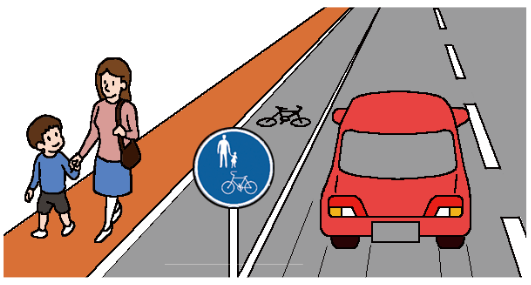
• Pedestrians should use the sidewalks or stay within the lines marked for walking on the road when they are available.
(2) Rules for crossing the street
Crossing the street safely
• Pedestrians should cross the street using the nearest traffic light intersection or pedestrian crossings, overpass or underpass.
• Pedestrians should never cross a street that is marked with signs that prohibit crossing.
• At crosswalks, pedestrians should clearly show a driver their intention to cross by raising their hand or looking at the driver, then cross only after confirming it is safe.
• Pedestrians should check that there are not any cars coming while crossing a street.
Rules of traffic lights
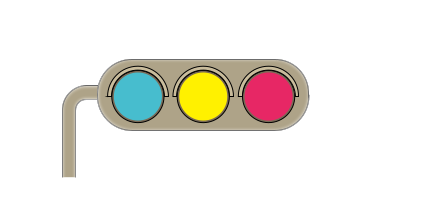
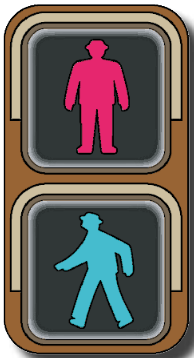
• Green light : Pedestrians can proceed to cross the street.
• Yellow or flashing green light: Pedestrians may not begin to cross the street if pedestrians has already commenced crossing, he or she should either attempt to finish crossing quickly or turn back.
• Red light: Pedestrians are prohibited from crossing the street.
• Crossing streets that have traffic light buttons: Pedestrians should push the button to change the light to green after which they can proceed to cross the street.
Printed page 99
PDF page 114 ↗Crossing streets that have no traffic lights
• Pedestrians should cross the street only after confirming there are no vehicles coming from either direction.
• Before crossing the streets, pedestrians should stop and look in both directions to check for oncoming vehicles. If vehicles are approaching pedestrians should wait until they pass.
• Pedestrians should continue looking both ways to check for oncoming vehicles when crossing the street, and walk straight ahead rather than diagonally.
Rules for rail crossings
• Before walking over a rail crossing, pedestrians should stop and look both ways to make sure it is safe.
• Pedestrians should never attempt to enter a rail crossing when the warning bell is sounding or the crossing bar is on its way down.
(3) Walking at night
Pedestrians should wear brightly colored clothing or reflective materials at night
When walking on the street at night, pedestrians should wear brightly colored clothing such as white or yellow as well as accessories with reflective materials or LED lights to ensure that drivers can easily see them.
1-2 Safety guidelines for cyclists
(1) Five rules to follow to ensure safety when riding a bicycle
Rule 1. In principle, cyclists must ride on roadways and ride on the left; only in exceptional cases may sidewalks be used and give pedestrians the right of way.
• Bicycles are classified as vehicles, so as a general rule, cyclists should use the left side of street.
• Cyclists should use designated bicycle paths when they are available.
• While cyclists may use the sidewalks on the left of roads, they should not impede the passage of pedestrians.
• Cyclists should use the lanes marked for bicycles on sidewalks or roads when they are available.
• Children under 13, adults 70 and over, and people with physical disabilities are permitted to ride a bicycle on the sidewalk.
• If standard bicycles are permitted to be ridden on sidewalk, you must keep to the roadway side, and proceed along at a speed that can be stopped immediately.
• Cyclists must come to a stop if the bicycle’s progress would prevent pedestrians from proceeding
Printed page 100
PDF page 115 ↗Rule 2. At intersections, obey traffic signals and must come to a stop and check safety.
• At an intersection where traffic light mechanism is installed, check for safety and cross the street after the light turns green.
• At the intersection where cyclists should stop temporarily, make sure to stop temporarily to check for safety.
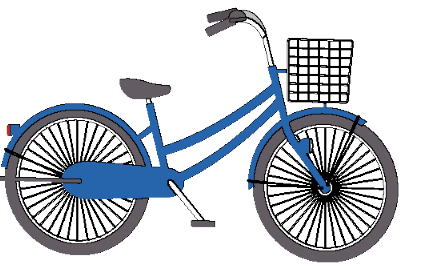
Rule 3. Cyclists must use bicycle lights at night.
• Cyclists must use bicycle lights at night.
• Cyclists should inspect that bicycle lights are surely it before riding bicycles
Rule 4. Prohibited from riding under the influence of alcohol
• Cyclists are strictly prohibited from riding bicycles when they drink alcohol.
Rule 5. Wear bicycle helmet
• All bicycle users should wear a bicycle helmet when they ride bicycles.
• When having others ride a bicycle, you should have them wear a bicycle helmet. Parents and guardians must ensure that children wear a bicycle helmet when children ride a bicycle and have infants ride on child seat for bicycle;
Other regulations
• Riding double and riding side by side is prohibited.
• Cyclists must not use umbrellas or use mobile phones when riding.
• Cyclists can take out insurance against liabilities for damages caused in a bicycle accident and their own injuries. In particular, please keep in mind that you are required to purchase “bicycle liability insurance” to cover liabilities for damages in many areas such as Tokyo or Osaka.
See the following URL for details:
https://www.mlit.go.jp/road/bicycleuse/promotion/index.html
(2) Using intersections
When making a right-hand turn
• At intersections with traffic lights
When the light turns green, the cyclist should cross the intersection in a straight direction and come to a stop on the opposite side with the bicycle facing right. When the light of the intersecting street turns green, the cyclist should proceed in a straight direction after looking both ways to check for safety.
• At intersections without traffic lights
The cyclist should look behind to check for safety, cross the intersection in a straight direction, then slow down to make a right-hand turn, and check for oncoming cars before proceeding.
When making a left-hand turn
The cyclist should make sure not to obstruct pedestrians crossing the street.
Printed page 101
PDF page 116 ↗Designated lines for bicycles
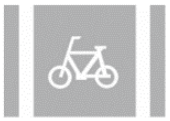
When an intersection has designated lines for bicycles, cyclists should ride within the lines.
1-3 Safety guidelines for those riding “specific small motorized bicycles” (electric scooters / kickboards, etc.)
• While a driver’s license is not required to operate electric scooters, those under 16 years of age are prohibited from riding them.
• If the vehicle does not meet specific size and structural standards of “specific small motorized bicycles,” a drivers license will be required for use.
• It is also necessary to attach a license plate and enroll in liability insurance.
• Electric scooters must be ridden on the left side of the road. Don’t ride on the right.
• Be sure to obey all traffic lights and signs.
• Never ride an electric scooter after drinking alcohol.
• Never lend an electric scooter to someone who has been drinking, or encourage someone who might ride one while intoxicated to drink.
• Do not ride double or side by side.
• Do not use an umbrella or a mobile phone while riding one.
• If an accident occurs, stop riding and help anyone who is injured, and report the accident to the police.
• Be sure to wear a helmet when riding an electric scooter.
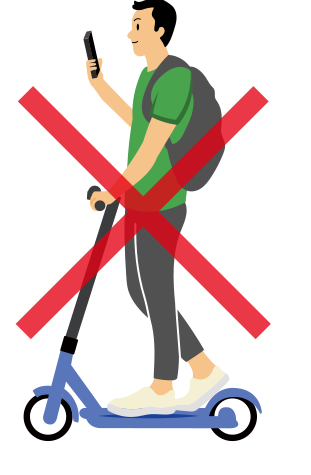
Please see the following website for details:
https://www.npa.go.jp/english/bureau/traffic/index.html
Printed page 102
PDF page 117 ↗1-4 Safety guidelines for drivers (automobiles and motorcycles)
• You need a driver’s license to drive.
• You must present your driver’s license when asked by a police officer in the event of an accident or a violation of traffic rules.
• You must drive on the left.
• When driving near pedestrians and cyclists, drivers should slow down and make sure to keep a safe distance between them and the vehicle.
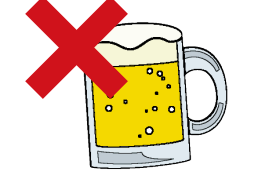
• NEVER drive after drink.
• It is also prohibited to lend your car to someone who is under the influence of alcohol, to encourage someone who is going to drive to drink, and to ask somebody who has drunk alcohol to drive.
• Drivers and other passengers must fasten their seat belts.
• Young children under 6 must sit on a child seat.
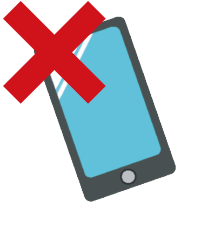
• You must not use a mobile phone while driving.
• A riding helmet must be worn when riding a motorcycle.
See the following URL for details:
https://www.npa.go.jp/english/bureau/traffic/index.html
Printed page 103
PDF page 118 ↗2 Driver’s license
One of the following three valid driver’s licenses is required to drive a car (including motorcycles) and a general motorized bicycle in Japan:
i. Japanese driver’s license;
ii. International driving permit (issued by the countries who signed the 1949 Geneva Conventions and is in the official format); or
iii. Foreign driver’s license issued in the following countries with a Japanese translation certified by the embassy of your country, etc.:
(Six countries and areas: Switzerland, Germany, France, Belgium, Monaco and Taiwan)
* A moped is a type of general motorized bicycle, so you have to have one of the licenses mentioned in 1. to 3. above to ride one.
* Regarding 2. and 3., the permit is valid for a maximum of one year.
See the following URL for details:
https://www.npa.go.jp/english/bureau/traffic/index.html
2-1 How to get a Japanese driver’s license
• There are several ways to get a Japanese driver’s license as follows:
i. Getting a Japanese license by taking a driver’s license test
• You must pass the aptitude, skills and knowledge examination at a Driver’s License Center, etc.
• If you take a complete course of driving lessons at a designated driving school, you will be exempted from taking a skills examination.
ii. How to convert a foreign driver’s license to a Japanese one
• If a foreign driver’s license holder is approved as having sufficient knowledge of road rules and practical driving skills, he or she will be exempted from taking knowledge and skills examination.
• After being licensed in a country, you must have resided for at least an additional three months there.
• Your application must be submitted at a Driver’s License Center under the jurisdiction of the prefectural police in your area.
• For more details on the documents required for the application, please ask at a Driver’s License Centers.
Printed page 104
PDF page 119 ↗2-2 How to renew a Japanese driver’s license
Renewal of the driver’s license
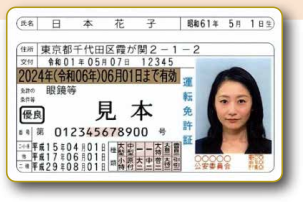
• A Japanese driver’s license has a validity period.
• When the renewal time approaches, a notice will be sent to your registered address as a postal card. Renew your license in time.
• If you do not renew your driver’s license, you are not allowed to drive.
How to change your registered address
• If there is any change with regard to your name or address etc, notify a police station near you of that fact.
• Further details such as which documents you will need are available at a police station near you.
2-3 Penalty point system
• When a driver violates traffic rules or causes an accident, penalty points will be given.
• A driver’s license may be suspended or revoked based on the sum of the points accumulated over the last three years.
3 Ownership of motor vehicles (including motorcycles)
3-1 Motor vehicle registration
Motor vehicles cannot be driven on public roads unless they are registered.
In addition, registration procedures are required when there are changes to the name or address of the owner or user of a registered vehicle, or when the vehicle is no longer used in Japan.
(1) When to register and types of registration
Registration for an unregistered vehicle
• When you start to use an unregistered vehicle
→ Initial registration
Printed page 105
PDF page 120 ↗Registrations for an already-registered vehicle
• When the name or address of the owner/user change
→ Registration of alteration
• When the owner changes
→ Registration of transfer
• In case of disassembly or export of a vehicle
→ Registration of deletion
(2) Where to register
• Registration can be done at 91 bureaus of the Ministry of Land, Infrastructure, Transport and Tourism (MLIT) or Automobile Inspection & Registration offices around Japan.
• If you have any questions about registration, please ask at an MLIT bureau or Automobile Inspection & Registration office near you.
Information on MLIT bureaus in Japan:
https://www.jidoushatouroku-portal.mlit.go.jp/jidousha/kensatoroku/list/index.html
3-2 Parking Space Certificate
To own an automobile, you as the owner have to have a parking space. Therefore, when you purchase one or when you move and change your address, you have to register your car and have a certificate of parking space issued by the police station with jurisdiction over the location of parking space.
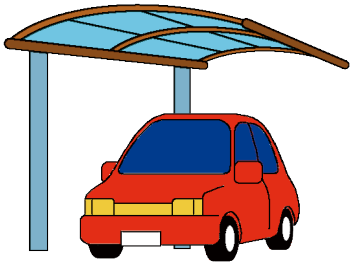
In addition, in case of a light motor vehicle, you must notify the police station with jurisdiction over the location.
This certification is required for automobiles in cities, towns, some villages, and the 23 wards of Tokyo. In addition, for light vehicles, this certification is required in some cities and the 23 wards of Tokyo.
For more information, please contact the police station with jurisdiction over the parking location.
Printed page 106
PDF page 121 ↗3-3 Vehicle Safety Inspection (including some types of motorcycles)
• Automobile owners have to have their motor vehicles inspected periodically as required by law.
• There are two ways to have your car inspected:
i. Carrying to Service garage
About 90% of automobile owners in Japan nowadays have an inspection performed at an authorized service garage. To request an inspection, ask at a service garage with blue sign (designated service garage), yellow sign or green sign (certified service garage) near you.
ii. By yourself at an MLIT bureau
About 10% of the automobile owners in Japan nowadays maintain their automobile by themselves and take it to an MLIT bureau for a safety inspection. Inspection can be carried out at 93 MLIT bureaus (89 for Kei-vehicles) located across the country. For further information on the inspection, please ask at an MLIT bureau near you.
MLIT bureau locator
https://www.jidoushatouroku-portal.mlit.go.jp/jidousha/kensatoroku/list/index.html
Information on the Kei-Vehicles
https://www.keikenkyo.or.jp/procedures/procedures_000134.html
• After your motor vehicle passes its periodical inspection, a certificate and a sticker on which the inspection expiration date is printed will be issued. Put the sticker on the windshield (or the upper left part of a number plate in the case of motorcycles), and make sure to carry the certificate whenever you drive.
Printed page 107
PDF page 122 ↗3-4 Car Insurance
(1) Compulsory Automobile Liability Insurance (CALI)
What is CALI?
• CALI is an insurance mandated for all registered vehicles, including automobiles and motorbikes, to cover provide relief to the victims of traffic accidents.
• If someone gets injured or dies in an accident, insurance benefit will be paid from CALI.
• By law, cars, motorcycles (including electric scooters and mopeds) may not be operated without liability insurance. Violations may result in penalties.
• If you purchase CALI (mutual insurance), a certificate is issued for proving the entry of CALI. When you operate an automobile, make sure to carry the certificate with you. Additionally, as an insurance (mutual insurance) sticker is issued for a motorcycle whose engine displacement is 250 cc or less, make sure to attach such sticker on the upper left part of the number plate (in the case of motorized bicycle, to the place where the number plate is easily viewable).
• If you cause an accident resulting in injuries or death without CALI (mutual insurance), you will have to pay a very large amount of medical expenses and compensation by yourself.
• In some cases, such as a serious permanent disability caused by a car accident, you may be eligible to receive caregiving cost assistance from the National Agency for Automotive Safety & Victims’ Aid (NASVA). Please consult the NASVA for details.
See the following URL for details:
About CALI/mutual insurance
https://www.mlit.go.jp/jidosha/jibaiseki/about/overview/index.html
About NASVA
https://www.mlit.go.jp/jidosha/jibaiseki/nini_nasva/index.html
Where to buy CALI (mutual insurance)
• CALI (mutual insurance) is available at the following:
i. Insurance companies (mutual aid associations), branches and dealers
ii. Car and motorbike dealers
iii. For moped bikes and motorbike, CALI can be purchased at Post Offices (some do not sell CALI), some insurance companies (mutual aid associations), online or at convenience stores.
* If you have any inquiries, ask at a location close to you that deals in CALI.
Printed page 108
PDF page 123 ↗(2) Voluntary Insurance (mutual insurance)
CALI does not cover property damage due to accidents that cause damage to objects including vehicles etc..
Because of this, there is a “voluntary Insurance (mutual insurance) “ for covering what CALI does not.
Differences between CALI and voluntary insurance are as follows:
| Insurance | CALI | Voluntary Insurance |
|---|---|---|
| Purchase | Compulsory | Optional at a private insurance company or mutual aid association |
| Coverage | Only liability for bodily injury | • Liability for bodily injury • Liability for property damage • Injury • Repair of car damage Other coverage, as per contract. |
| Benefit | Limited | Upper limits, as per contract |
Printed page 109
PDF page 124 ↗4 Responding to a Traffic Accident
4-1 Stop driving
• Stop driving immediately.
• Pull your car over to a safe place such as the road shoulder or an open space, to give way to other cars.
4-2 Emergency calls to the police and an ambulance
• If anyone gets injured, call 119 to request an ambulance.
• Until the ambulance arrives, try to give first aid (such as stop any bleeding) to the injured following the operator’s instructions. Do NOT move the injured person unnecessarily.
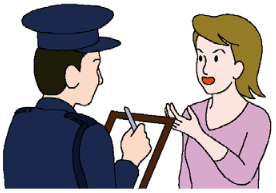
• Whether anyone is injured or not, you need to contact the police on 110.
• Do NOT leave the spot until a police officer arrives.
• When a police officer arrives, report the accident and have the site inspected.
4-3 Doctor’s diagnosis
• You may not feel injured in an accident, however, it may turn out later that you have been seriously injured.
• It is recommended that you see a doctor right away.
See the following URL for details:
https://www.npa.go.jp/english/bureau/traffic/index.html
4-4 Application for a Traffic Accident Certificate
• To apply for any assistance after an accident, a Traffic Accident Certificate may be needed.
• The Certificate can be applied for at a Japan Safe Driving Center (JSDC) Ask at the police station you have reported the accident to for more details regarding the application procedure.
• A Certificate will not be issued for an accident that has not been reported to the police. So be sure to report any traffic accident to the police.
JSDC website
https://www.jsdc.or.jp/center/tabid/106/Default.aspx