Government handbook · original text
Medical services
7th edition · rules as of October 2024 · the latest in English. A newer 8th edition ↗ exists in Japanese only.
Reproduced from the Immigration Services Agency, Guidebook on Living and Working, 2025 edition, under the Government of Japan Standard Terms of Use; the PDF is the authoritative version: open the PDF ↗
Our guides for the same procedures
The handbook is the official background, as of October 2024. These guides turn it into current steps, checked against today’s official pages.
- Seeing a doctor or dentist in Japan: visits and costsStart at a local clinic, show your My Number Card or eligibility certificate, and pay 30% of the bill if you are 6 to 69. Call 119 in an emergency.
- Health insurance in Japan: enrollment and changing coverageJoin employees' health insurance through your employer or National Health Insurance at your municipal office. Report joining or leaving within 14 days.
- Bringing medicine to Japan: import rules and documentsUp to 1 month's supply of prescription medicine needs no paperwork. Above that, get an import confirmation certificate. Narcotics need a permit first.
- High medical bills in Japan: expense caps and applicationsIf your medical bills in one calendar month go over your cap, your insurer pays back the excess. You can claim for 2 years.
- Sick pay in Japan: injury and sickness allowanceClaim the injury and sickness allowance if illness or injury outside work stops you working. It is paid from the 4th day, for up to 1 year 6 months.
- Mental health support in Japan: finding help and careWhere to call or chat when you are struggling, which lines take other languages, and how to find and pay less for psychiatric care.Urgent
- Heatstroke in Japan: warning signs, alerts and helpWhat Japan's two heatstroke alerts mean, how to get them free, where cooling shelters open, and when to call 119 for someone with signs of heatstroke.
- Long-term care insurance (kaigo hoken) in Japan: premiums and supportWhy you pay a care premium from 40, how to apply to your municipality for a care needs certification, and your 10% share of care costs.
- Health checkups in Japan: workplace and municipal screeningAdults in Japan get health checks from their employer if regularly employed, their health insurer at ages 40 to 74, and cancer screening by their municipality.
- Disability support in Japan: certificates and servicesApply through your municipal office for a disability certificate, welfare services and lower medical costs, and check the disability pension conditions.
- Tokyo and Yokohama hospitals and clinics: English supportHospitals and clinics in Tokyo and Yokohama for international residents, with what each website says about English support and insurance.
Ask about medical services
Answers from this chapter’s guides and its sources onlyOriginal text, page by page
This is an unofficial HTML reproduction of the official PDF, made by Foreigners in Japan. The PDF is the source: if a table, list or picture looks wrong here, or you need the exact layout, open the original page.
Printed page 65
PDF page 80 ↗Chapter 6 Medical Services
1 Medical institutions
1-1 Types of medical institutions
• There are a variety of medical institutions in Japan and each one has its own role. If your medical concern is not severe, visit a local clinic.
i. Doctor’s offices, clinics: For treatment of mild symptoms and slight injuries.
ii. Middle-scale hospital: For surgeries, hospitalization and emergency care
iii. Large-scale hospital: For critical emergencies and advanced medical treatment
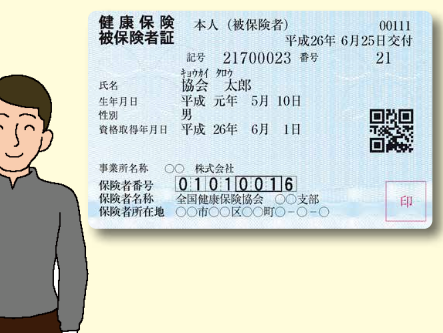
• Present your health insurance card at the hospital or clinic, or otherwise you will cover the full amount of medical expenses.
• Find a doctor depends on your symptoms of illness or injuries. Here are some examples:
| Internal Medicine | Diagnosis and treatment of diseases affecting the internal organs (digestive, respiratory, circulatory, and urinary organs, blood, endocrine, nerves, etc.) mainly with medication without operations. You can also see them when you catch a cold or have general health problems |
|---|---|
| Surgery | Surgical treatments mainly by operations for internal organs damaged by cancer and injuries |
| Pediatrics | Treatment of children’s illness |
| Orthopedics | Treatment of the locomotive systems such as bones, joints, muscles, tendons and its related nerves |
| Ophthalmology | Diagnosis and treatment of eye disorders |
| Dentistry | Treatment of teeth; endodontics, orthodontics, etc. |
| Obstetrics | Treatment of pregnancy, childbirth, newborns and related disorders etc. |
Printed page 66
PDF page 81 ↗1-2 How to find medical institution
• You can search for one using any of the following:
i. Municipal newsletters issued by the municipal office in your area
ii. Online
iii. Medical Information Net (NAVII) where you can search for medical institutions nationwide
* Medical Information Net (NAVII)
https://www.iryou.teikyouseido.mhlw.go.jp/znk-web/juminkanja/S2300/initialize

* In addition, you can also search for medical institutions (hub medical institutions and other medical facilities that can accept foreign patients, selected by prefectures) in foreign languages on the website of the Japan National Tourism Organization (JNTO) for foreign travelers visiting Japan.
https://www.jnto.go.jp/emergency/jpn/mi_guide.html

• It is also possible to consult at the following:
i. The municipal office in your area
ii. A Medical Safety Support Center (*)
* A total of 400 Medical Safety Support Centers are located in prefectures, municipalities with public health centers and wards in Tokyo.
See the following URL for details:
https://www.anzen-shien.jp/center/

• If you do not speak Japanese, you can consult at the following:
i. The municipal office in your area
ii. International associations near you
iii. NPOs (they may speak your language)
Printed page 67
PDF page 82 ↗2 Medical Insurance
No matter where you are from, you are obliged to enroll in public medical insurance in Japan. This is a Japanese social system to guarantee that any resident can equally receives medical services at a high standard at low cost by sharing the cost across the whole of society.
2-1 Health Insurance
(1) Enrollment Requirements
Those who work for a company which is obliged to have their employees enroll in the health insurance and are obliged to enroll in the health insurance:
i. Regular employees, chief executives, board of directors
ii. Part-time workers, temporary workers, etc., who work at least three-quarters of the fixed weekly working hours of full-time employees at the same company (business establishment)
iii. Part-time workers, temporary workers, etc., who fulfill all of the following:
• who work during office hours for over 20 hours a week;
• who are expected to work for more than two months;
• who earn more than 88,000 yen a month;
• who are not students; and
• who work for a company with more than 51 employees
(2) Insurance premiums
As a rule, both the companies (employers) and the insured pay half of the health insurance premiums. Dependents of the insured do not need to pay premiums.
(3) Benefits
Copayment of medical expenses
The copayment ratio of medical expenses for the insured is as follows:
• Preschool infants under six years old.....................................20%
• School-age children through adults up to 69 years old......30%
• Adults aged 70 to 74 years old...............................................20% (Wage-earners at their pre-retirement income level: 30%)
Medical expenses
• When you have just been employed by a company and not received an insurance card yet;
• When you purchase medical devices such as a cast;
Printed page 68
PDF page 83 ↗
• When you have received an acupuncture, moxibustion or massage which your doctor deems medically necessary; or
• When you have received medical services outside of Japan.
In the above-mentioned cases, you will need to pay the full amount of expenses by yourself; however, once your application is approved, you will be eligible for reimbursement of the expenses minus your copayment.
High-cost medical care expenses
The high-cost medical treatment system is a financial support system for cases where the total amount of medical expenses during a month that are paid for treatment or medications (except the cost for food and bed during in hospital) exceeds a certain limit. In such cases, the over-the-limit amount will be covered. The fixed monthly copayment limit varies with age (whether the insured is under 70 years old or not) and the income level of the insured.
Medical transportation expenses
If a patient has a difficulty in moving due to illness or injury, but get transferred due to a temporary and emergency need as instructed by a doctor, he/she will be eligible for reimbursement of his/her medical transportation expenses in cash in cases where the following requirements are fulfilled:
• You have been properly treated at the medical institution where you had been transferred to;
• The reason why the patient had significant difficulties in transportation is his/her injury or illness which is the cause of the transportation;
• It was an emergency and unavoidable.
Accident and Sickness Allowance
When the insured is unable to work due to illness or injury and have been absent from work for three consecutive days, accident and sickness allowance will be paid from the fourth day of absence.
The duration of payment will be onward for up to 18 months in total counting from the first day of payment.
Childbirth and Childcare lump-sum grant
This is a benefit for an insured or his dependent to help cover expenses related to childbirth. As a general rule, the allowance per child is 500,000 yen.
Maternity Leave Allowance
An insured of health insurance will be eligible to receive Maternity Leave Allowance when she takes leave for give birth. The allowance is paid for the days the insured is away from work during a period starting 42 days (98 days in the case of multiple pregnancies) before the estimated delivery day and 56 days afterward.
Family Medical Expenses
If the dependents of an insured (subscriber) get ill or injured, the insured will be eligible to receive Family Medical Expenses. The range, measure and duration of the payment are the same as that of Medical Expenses for the insured.
Printed page 69
PDF page 84 ↗2-2 National Health Insurance
(1) Enrollment requirements
• All registered residents who are under 75 and are not in Employees’ Health Insurance are obliged to get enrolled in National Health Insurance.
• Foreign nationals are obliged to join National Health Insurance except in the following cases:
i. The period of stay is less than three months (*);
ii. The status of residence is “Temporary Visitor”;
iii. The status of residence is “Designated Activities” and the activities are specified as “to receive medical treatment” or “to provide everyday assistance for someone who is engaged in the activities mentioned above”;
iv. The status of residence is “Designated Activities” and the activities are specified as “sightseeing, recreation or other similar activities”;
v. The status of residence is “Diplomat”;
vi. Persons who do not have a valid status of residence; or
vii.Persons who are from a country with which the Japanese government has a social security agreement with including health insurance, and have an official certificate issued by the government to show their membership of the social insurance system in their home country.

* Even if your period of stay is shorter than three months, you can join the National Health Insurance if your status of residence is one of the following and if you have any document to certify that your stay will be longer than three months:
• “Entertainer”
• ”Technical Intern Training”
• “Dependent”
• “Designated Activities (except iii. and iv. above)”
(2) Enrollment and withdrawal application
You can join in or withdraw from National Health Insurance (*) at the municipal office in your area. Ask the municipal office for more details.
(*) You must withdraw from National Health Insurance in the following cases:
i. When you move to a different municipality; or
ii. When you join Employee’s Health Insurance.
(3) Insurance premiums
Insurance premiums are calculated on a per-household basis and decided according to the insured’s income or the number of the household. This amount is paid by the head of the household.
* Insurance premiums may be reduced in accordance with income and other circumstances. Ask for further information at the municipal office in your area.
Printed page 70
PDF page 85 ↗(4) Benefits
Copayment of medical expenses
The copayment ratio of medical expenses for an insured is as follows:
• Preschool infants under six years old.....................................20%
• School-age children through adults up to 69 years old......30%
• Adults aged 70 to 74 years old...............................................20% (Wage-earners at their pre-retirement income level: 30%)
Medical expenses

• When you have just been joined the National Health Insurance and not received an insurance card yet;
• When you purchase medical devices such as a cast;
• When you have received an acupuncture, moxibustion or massage which your doctor deems medically necessary; or
• When you have received medical services outside of Japan.
In the above-mentioned cases, you will need to pay the full amount of expenses by yourself; however, once your application is approved, you will be eligible for reimbursement of the expenses minus your copayment.
High-cost medical care expenses
The high-cost medical treatment system is a financial support system for cases where the total amount of medical expenses during a month that are paid for treatment or medications (except the cost for food and bed during in hospital) exceeds a certain limit. In such cases, the over-the-limit amount will be covered. The fixed monthly copayment limit varies with age (whether the insured is under 70 years old or not) and the income level of the insured.
Medical transportation expenses
If a patient has a difficulty in moving due to illness or injury, but get transferred due to a temporary and emergency need as instructed by a doctor, he/she will be eligible for reimbursement of his/her medical transportation expenses in cash in cases where the following requirements are fulfilled:
• You have been properly treated at the medical institution where you had been transferred to;
• The reason why the patient had significant difficulties in transportation is his/her injury or illness which is the cause of the transportation;
• It was an emergency and unavoidable.
Childbirth and Childcare lump-sum grant
This is a benefit for an insured or his dependent to help cover expenses related to childbirth. As a general rule, the allowance per child is 500,000 yen.
Printed page 71
PDF page 86 ↗2-3 Medical Care System for Elderly in the Latter Stage of Life
(1) Enrollment Requirements
When you become 75 years of age
• All registered residents in Japan aged 75 years or older must join the Medical Care System for Elderly in the Latter Stage of Life.
• Those who are between 65 and 74 years old and have been approved as having certain disabilities can also join this program.
• You have to withdraw from other medical insurance programs (National Health Insurance, Health Insurance Associations, Japan Health Insurance Association, or Mutual Aid Association, etc.)
• All foreign nationals aged 75 years or older, except in the following cases, must join this program as well:
i. The period of stay is less than three months (*);
ii. The status of residence is “Temporary Visitor”;
iii. The status of residence is “Designated Activities” and the activities are specified as “to receive medical treatment” or “to provide everyday assistance for someone who is engaged in the activities mentioned above”;
iv. The status of residence is “Designated Activities” and the activities are specified as “sightseeing, recreation or other similar activities”;
v. The status of residence is “Diplomat”;
vi. Persons who do not have a valid status of residence; or
vii.Persons who are from a country with which the Japanese government has a social security agreement including health insurance, and have an official certificate issued by the government to show their membership of the social insurance system in their home country.
(*)Even if your period of stay is shorter than three months, you can join the program if your status of residence is one of the following and if you have any document to certify that your stay will be longer than three months:
• “Entertainer”
• “Technical Intern Training”
• “Dependent”
• “Designated Activities” (except iii. and iv. above)
(2) Enrollment and withdrawal application
Your application can be submitted at the municipal office in your area. Ask the municipal office for more details.
Those who move to another municipality in another prefecture should withdraw from this program.
Printed page 72
PDF page 87 ↗(3) Insurance Premiums
Insurance premiums are the total amount of per-capita base and income-base charges.
There are cases in which the premiums are reduced for dependents in the employees’ health insurance or for the insured in accordance with their income level and life status. Ask for more details at the municipal office in your area, or at an Association responsible for operation of the medical-care system for the elderly aged 75 and older.
(4) Benefits
Copayment of medical expenses
When you receive medical treatment under the insurance coverage, your copayment ratio is 10%. However, if you have an income at a preretirement level, your portion is 30%, or if you have an income above a certain level, your portion is 20%.
Medical expenses

• When you have just obtained insurance but not received an insurance card yet;
• When you purchase medical devices such as a cast;
• When you have received an acupuncture, moxibustion or massage which your doctor deems medically necessary; or
• When you have received medical services outside of Japan.
In the above-mentioned cases, you will need to pay the full amount of expenses by yourself. If your application is approved, you can receive medical expenses for the portion that exceeds the copayment.
High-cost medical care expenses
The high-cost medical treatment system is a financial support system for cases where the total amount of medical expenses during a month that are paid for treatment or medications (except the cost for food and bed during in hospital) exceeds a certain limit. In such cases, the over-the-limit amount will be covered. The fixed monthly copayment limit varies with the income level of the insured.
Medical transportation expenses
If a patient has a difficulty in moving due to illness or injury, but get transferred due to an instruction by a doctor, he/she will be eligible for reimbursement of his/her medical transportation expenses in cash in cases where the following requirements are fulfilled:
• You have been properly treated at the medical institution where you had been transferred to;
• The reason why the patient had significant difficulties in transportation is his/her injury or illness which is the cause of the transportation;
• It was an emergency and unavoidable.
Printed page 73
PDF page 88 ↗3 Medicine
• Medicine can be purchased at pharmacies and drugstores.
• Medicine is often used to cure diseases and injuries. However, bear in mind that any medicine has side effects and that it should be handled with care.
• If you have any questions about any medicine, consult a pharmacist or a registered drug seller at the pharmacy and drugstore.
* A registered drug seller offers some over-the-counter (OTC) pharmaceuticals as well.
3-1 Pharmacies
A pharmacy is a shop where pharmacists prepare medicines based on prescription issued by a doctor. After having medicine-taking guidance, you can receive the medicines. OTC pharmaceuticals are also available.
3-2 Drugstores
OTC pharmaceuticals are available at drug stores as well as at pharmacies. However, prescription medications cannot be prepared at drugstores.