Government handbook · original text
Employment and working
7th edition · rules as of October 2024 · the latest in English. A newer 8th edition ↗ exists in Japanese only.
Reproduced from the Immigration Services Agency, Guidebook on Living and Working, 2025 edition, under the Government of Japan Standard Terms of Use; the PDF is the authoritative version: open the PDF ↗
Our guides for the same procedures
The handbook is the official background, as of October 2024. These guides turn it into current steps, checked against today’s official pages.
- Parental leave in Japan: maternity, childcare and benefitsPlan maternity, childcare and paternity leave as an employee and claim the pay that replaces your wages. Ask 1 month before childcare leave.
- Find a job in Japan through Hello WorkLook for a job through Hello Work, which is free, or a licensed agency. Check your status of residence allows the work and avoid brokers who ask for money.
- Working in Japan: check your residence status and permissionCheck on your residence card whether your status lets you do a job, and get free permission for other activity from immigration before you start.
- Job offers in Japan: check your contract, hours and payCheck the written working conditions your employer must give you, and the legal rules on hours, overtime, paid leave, minimum wage and pay.
- Employment problems in Japan: unpaid wages and dismissalWhat to do if you're unpaid, dismissed or leaving a job: free help, any immigration report your status requires, and insurance and pension deadlines.
- Minimum wage in Japan: 2026 rates and checking your payFiscal 2026 minimum wage by prefecture, from ¥1,085 (Miyazaki) to ¥1,280 (Tokyo) an hour, how to check your pay and what to do if paid less.
- Unemployment benefits in Japan: eligibility and claims at Hello WorkClaim the basic allowance at Hello Work after losing your job. You get about 50 to 80% of your daily wage for 90 to 360 days, within 1 year of leaving.
- Injured at work in Japan (rōsai): treatment and compensation claimsClaim rōsai for a work or commuting injury. Designated care is free (commute: up to ¥200 once). Eligible time off pays 80% of the benefit base from day 4.
- Family care leave in Japan: eligibility, time off and payTake up to 93 days of family care leave, or 5 care days a year, for a relative who needs care. Employment insurance pays 67% during leave.
- Workplace harassment in Japan: recognition and supportWhat the law means by power, sexual and pregnancy or care harassment at work, what your employer must do, and how to get free help from the labour bureau.
- Changing jobs in Japan: work status and immigration noticesReport leaving or changing a job to immigration within 14 days of the event. Check whether the new job needs a change of status.
- Side jobs in Japan: work permission, employer rules and taxCheck whether a side job fits your status, get immigration permission before you start if you need it, and check whether you must file a tax return.
- Freelancing in Japan: residence status, tax and invoicesCheck your status allows freelance work, file the opening notice with the tax office, and find the blue return and final return deadlines that apply to you.
Ask about employment and working
Answers from this chapter’s guides and its sources onlyOriginal text, page by page
This is an unofficial HTML reproduction of the official PDF, made by Foreigners in Japan. The PDF is the source: if a table, list or picture looks wrong here, or you need the exact layout, open the original page.
Printed page 23
PDF page 38 ↗Chapter 3 Employment/ Working

1 Basic knowledge before starting work
1-1 Status of Residence
Foreign nationals are permitted to engage in activities in Japan within the scope of activities permitted by their status of residence.
Foreign nationals can be divided into the following three categories, which are determined by their possibility of getting permission to work.
Status of Residence with which people may work within a specified scope
Diplomat, Official, Professor, Artist, Religious Activities, Journalist, Highly-Skilled Professional, Business Manager, Legal/Accounting Services, Medical Services, Researcher, Instructor, Engineer/ Specialist in Humanities/International Services, Intra-company Transferee, Nursing Care, Entertainer, Skilled Labor, Specified Skilled Worker, Technical Intern Training, Designated Activities (Working Holiday, Foreign Nurse and Certified Care Worker, etc., based on Economic Partnership Agreement (EPA))
Status of Residence with which people may not be permitted to work in principle
Cultural Activities, Temporary Visitor, Student, Trainee, Dependent
Status of Residence which people are permitted to work without restriction
Permanent Resident, Spouse or child of Japanese National etc., Spouse or child of Permanent Resident etc., Long-term Resident
1-2 Job hunting
(1) Hello Work
• At Hello Work (Public Employment Security Office), you can receive job introduction. For details of Hello Work, please see Chapter 3 2-5(5).
(2) When you use a job placement agency
• When you use a fee-charging job placement agency, in order to avoid troubles of job-hunting, please use appropriate companies.
Printed page 24
PDF page 39 ↗Are you asked for money for job placements?
You need not to pay money for job placement nor for work; in the case you have paid, you should retain evidence.
Can you confirm if the job placement agency has a license for job placement?
In order to introduce jobs (job placement), as a license is required, please make sure to confirm the license number and keep a note about it.
Have you been notified properly about labor conditions?
As it has been decided to present recruiting conditions through documents, including the contents, wages and locations, please make sure to confirm and keep such documents.
• For details of license/notification, you can confirm on “the Comprehensive Site for Human Resources Service”.
https://jinzai.hellowork.mhlw.go.jp/JinzaiWeb/GICB101010.do?action=initDisp&screenId=GICB101010

1-3 Forms of employment
(1) Dispatched workers (dispatched employees)
• Dispatched workers work as follows:
i. A worker enters into a labor contract with a temporary staff company (dispatching company). The dispatching company employs the worker and pays him/her.
ii. The worker is dispatched to another company based on a worker dispatch contract.
iii. The worker works under the directions and orders of the company receiving the dispatched worker.
• The Worker Dispatching Act sets forth detailed rules for dispatched workers to protect them.
• There are personnel who offer consultation at both dispatching companies and companies receiving dispatched workers. If a dispatched worker encounters problems at work, he/she can contact one of the persons in charge.
• The dispatching company and the company receiving dispatched workers share the responsibility, including matters pertaining to labor standards, safety and health, etc.
(2) Contract employees (employees with fixed-term employment contracts)
• Contract employees are workers who made a labor contract with a fixed contract term with their employers.
• A labor contract with a fixed contract term terminates on the expiration of the term of the contract. However, the term of contract can be re-concluded (extended) if the worker and the company agree to renew the labor contract.
• The term of contract shall be a maximum of 3 years, with exceptions in certain cases.
Printed page 25
PDF page 40 ↗(3) Part-time workers
• Part-time workers are workers whose prescribed weekly working hours are shorter than that of regular workers (so called “full-time worker”) (*).
No matter how the workers are described such as part-timers, temporary part-time workers (known as arubaito in Japanese), contract employees, temporary employees and associate staff members, the workers are part-time workers as long as they work under this contract.
(*) “Weekly working hours” means the total working hours stipulated by the company's rules of employment, which start from the starting time to work to the time it ends, excluding break periods.
• The various acts pertaining to labor conditions apply to part-time workers, too. Therefore, if the part-time worker fulfills the required conditions, he/she;
i. is entitled to annual paid leave
ii. is covered by employment insurance, health insurance and employee’s pension insurance
• The company has the following obligations when they conclude a labor contract.
i. To clearly indicate working conditions to the worker
ii. To issue a written document with regards to six important items (See: 1-4 (2))
In addition, in the case of part-time workers and contract employees (employees with a fixed-term employment contracts), companies must basically provide documentation to specify the availability of pay raises, bonuses, severance allowance and consultation counters which deal with the improvement of employment management.
For details, please contact the Prefectural Labor Bureau's Employment Environment and Equal Employment Department (Office) or Consultation Counters on General Labor Matters.
https://www.mhlw.go.jp/content/000177581.pdf

(4) A person who works upon entering into a subcontracting agreement/contract
Principles
• In a “subcontracting” or “contract agreement”, as payment is made for the completion of a work assignment pursuant to a contract received from a client, contractors are treated as “business operators” who do not work under the instruction of a client. Therefore, a contractor cannot generally receive protection as a “worker (as an employee)”.
Exceptions
• However, even if you conclude a contract named as “subcontracting” or “contract agreement,” if it is judged from the actual type of working that you are a “worker” who actually receives instructions from the client, you can be protected as a “worker.”
• If it is difficult to determine if you are a “worker” or not, please contact the Labor Standards Inspection Office.
Reference: Those who work under subcontracting (contract agreement) may be subject to the “Act on Ensuring Proper Transactions Involving Specified Entrusted Business Operators” from November 2024 onwards. Please check here for details.
https://www.mhlw.go.jp/stf/seisakunitsuite/bunya/koyou_roudou/koyoukintou/zaitaku/index_00002.html

Printed page 26
PDF page 41 ↗1-4 Labor contract
(1) Range of meaning of the term “worker”
• The term ”worker” refers to a person who works under the instruction and control of an employer, receives wages as compensation for the work, and is subject to the protection of certain labor laws including the Labor Standards Act.
• "Workers" include people regardless of what kind of job they are engaged in. “Workers” include not only regular employees, but also dispatched workers, contract employees and part-time workers.
(2) Specification of working conditions
• To prevent workers from starting work without fully understanding the working conditions, such as wages, working hours, etc., which possibly lead to problems later on with their employer, the Labor Standards Act (one of the laws concerning working) in Japan stipulates that the employer must clearly indicate the working conditions to the worker when they conclude a labor contract.
• With regards to the following items that are particularly important, it is required as a rule for a company to issue a written document to the worker clearly indicating such conditions (exceptionally, the conditions can be clearly indicated by a fax or an E-mail, etc. (but limited to those which can be output to create a document) to the worker, if the worker prefers it).
i. When the contract starts and when it ends (pertaining to the term of contract)
* A labor contract may be entered into either with or without a fixed term. The type of employment itself, such as regular employees, contract employees, part-time workers, temporary staff (Arubaito), etc., does not reflect whether it is a contract with a fixed term. Therefore, it is important for an employee to confirm the term of contract itself, not the name of workstyle.
ii. Provisions related to renewal of the contract, when concluding a fixed term contract (possibility of renewal, a limit to the number of renewals, how decisions are made for renewal)
iii. Place of work, type of job (location of work, content of work, scope of changes)
iv. Schedule of work hours and rest time (the time work begins and the time work ends; whether there is overtime, break periods, days off/ holidays, rotation for alternative work schedules, etc.)
v. The amount of wages, and when and how they are paid (determination, computation and payment of wages, the period of computation and the date of payment)
vi. Terms of the end of the labor contract (including the reasons of dismissal)
• In addition, when entering into a fixed-term contract, if the contract renewal gives rise to the “right to request conversion to indefinite employment,” it is stipulated that the employee may request conversion to indefinite employment and that the working conditions after conversion must be clearly stated.
• The Labor Contracts Act stipulates that the employer and the worker should confirm details of the labor contracts as regards other matters besides those mentioned above on the documents as well as possible.
Printed page 27
PDF page 42 ↗Key Point: Prohibitions with regard to labor contracts
The Labor Standards Act also stipulates matters that an employer must not incorporate in a labor contract.
1) Having a monetary penalty for breach of a labor contract or establishes the amount of compensation for loss or damage. This is to prohibit fixing the amount of penalties or damages in advance. Therefore, it is not prohibited for a company to claim damages actually incurred as a result of a willful or negligent act of a worker as long as the amount of such damages is not predetermined.
2) Loaning money in advance as a condition for work, and unilaterally offsetting monthly wages against such monetary loans as repayment.
3) Forcing workers to deposit compulsory savings through the employer. It is prohibited for an employer to force its employees to deposit savings regardless of the reason, even for employee welfare matters such as company trip. However, it is permitted under certain conditions for the employer to take charge of one part of the wages entrusted to the employer by the employees based on its own decision, regardless of the conditions of the labor contract.
Key Point: If the working conditions as promised turned out to be different from the reality
• If a worker notices that the working conditions as promised at the time of conclusion of the labor contract differ from the reality after starting working, he/she may immediately cancel his/her labor contract on those grounds.
• Working conditions are decided based on the labor contract concluded by the employer and the worker, the rules of employment, etc., and minimum standards of the conditions are stipulated by the Labor Standards Act. (The conditions which don’t match with the minimum standards of conditions by the Labor Standards Act are no longer valid and substituted with the conditions stipulated by the Labor Standards Act.)
• In principle, the company cannot unilaterally change the work regulations to those unfavorable to the worker without obtaining the consent of the worker after he/she actually started working.
1-5 Wages
(1) Minimum Wage
The minimum wage refers to the minimum amount of wages that a company must pay to its employees. It is stipulated in The Minimum Wage Act.
(2) About the Minimum Wage
i. This applies to all workers regardless of types of working.
ii. It is prohibited to conclude a contract at a lower wage than the minimum wage. Hence, even if you agree to work at a lower wage than the minimum wage at the request of a company, such contract is null and void under the law, and you may afterwards claim the following from the company: [Shortfall from the hourly minimum wage] × [number of hours worked]
Printed page 28
PDF page 43 ↗(3) Allowance for Absence from Work
Absence from work for reasons attributable to the employer
In the event of an absence from work for reasons attributable to the employer, the employer must pay an allowance equal to at least 60 percent of the worker's average wage in order to guarantee a minimum standard of living for the worker. As long as the reasons for absence from work are attributable to the employer, a certain level of salary is guaranteed to the worker.
2 Rules for working
2-1 Payment of wages
There are rules on how wages must be paid to ensure that wages are paid in full to the workers. The following four principles are established.
| i. Principle of payment in currency | Principle | Wages must be paid in cash. |
|---|---|---|
| Exception | If a worker agrees, a bank transfer or other means can be used. In addition, if a company and the labor union makes an agreement, payment can be made in kind (such as company goods) instead of payment in currency. | |
| ii. Principle of direct payment | Wages must be paid directly to the worker. | |
| iii. Principle of payment of wages in full | Principle | Wages must be paid in full. |
| Exception | Deductions stipulated by law, such as income tax and social insurance premiums, etc. Deductions with an agreement concluded by a labor union or a representative of a majority of workers | |
| iv. Principle of regular payment at least once a month | Principle | Wages must be paid at least once a month on a fixed date.  For example, it is not permitted to pay wages for two months all at once. In addition, It is prohibited not to specify the date of payment, for example, such as "from the 20th to 25th every month,” or "the fourth Friday every month”, as the payment day changes within the range of a 7 days in a month. |
| Exception | Extraordinary wages and bonuses | |
Printed page 29
PDF page 44 ↗2-2 Working hours, Break periods, Days off
(1) Working hours
• Maximum working hours are stipulated by law.
• The Labor Standards Act stipulates that the maximum working hours should be 8 hours a day and 40 hours a week (legal working hours)
• If an employer has its workers work overtime, the employer must pay premium wages.
(2) Break periods
An employer must provide its workers during working hours, with a break period of at least 45 minutes if the working hours per day exceed 6 hours. Moreover, if they exceed 8 hours, it is at least 60 minutes.
(3) Days off
An employer must give its workers at least 1 day off per week, or at least 4 days off over a period of 4 weeks (legal holidays).
(4) Obligation of making decisions on working conditions regarding dispatched workers
The worker dispatching agency shall assume responsibility for making decisions on the working conditions of dispatched workers, and the employer receiving the worker dispatch service shall assume responsibility for the observation of the rules including working hours, break periods, days off, etc.
Key Point: Annual paid leave
Annual paid leave is a holiday (vacation) that a worker may take during which wages are paid even though he/she is absent from work on the prescribed working days. In principle, workers can take annual paid leave whenever they want and for whatever the reason is. A worker who has been working continuously for 6 months and has reported for work on at least 80% of the total working days is entitled to annual paid leave of 10 working days. Furthermore, as the worker’s years of service increases, the number of paid holidays he/she is entitled to annually will increase as well as long as he/she meets the condition of at least 80% of attendance at work (with an upper limit of 20 days). A company must permit holidays of 5 days by designating the season to workers who are given annual paid leave of more than 10 days.
In addition, workers such as dispatched workers and part-time workers, even though they have different types of employment from that of regular employees, shall be entitled to the same number of days of annual paid leave as regular employees, if they
• have worked continuously for 6 months*
• have reported for work on at least 80% of all working days
• have worked for at least 5 days a week or 217 days a year
Even in cases where they work only 4 days or less a week or 216 days or less a year, if their prescribed working hours are at least 30 hours a week, they shall be entitled to the same amount of annual paid leave as regular employees.
Printed page 30
PDF page 45 ↗Workers whose prescribed working days are 4 days or less a week or 216 days or less a year, and whose prescribed working hours are less than 30 hours a week, are granted annual paid leave in accordance with the prescribed number of working days.
* When the contract of an employee with a fixed-term contract is renewed, the days he/she reported for work prior to renewal of the contract will be included in the calculation if the renewal of contract makes the situation virtually the same as continuous employment.
2-3 Overtime work and work on holidays
(1) Overtime work and work on holidays
• A company must conclude a written agreement (hereinafter referred to as the “36 agreement”) with a labor union organized by a majority of workers, or a representative of a majority of workers if there is no union organized by a majority of workers, in a case where the company wants to have workers work in the following situations.
i. Overtime work beyond legal working hours
ii. Work on statutory holidays
• The maximum time of overtime work is stipulated by law.
• The maximum hours are stipulated in the Labor Standards Act. In principle, these maximums are up to 45 hours a month, 360 hours a year. (In the case of any temporary and special reasons, they are up to 720 hours a year but less than 100 hours a month (including work on holidays), 80 hours over an average of multiple months (including work on holidays). Up to six months a year, working overtime for more than 45 hours is permitted.
(2) Premium Wages
According to the 36 Agreement, an employer has to pay a premium wages in the case the company has its workers work overtime, or on holidays.
Key Point: How to calculate the rate of premium wages for overtime

i. 25% or more for overtime work in excess of legal working hours
* For overtime work in excess of legal working hours by 60 hours a month, a premium of 50% or more must be paid.
ii. 35% or more for work on a holiday (holiday work)
iii. 25% or more for work from 10:00 pm to 5:00 am (night work)
* For example, in the case of overtime work in excess of legal working hours, and when it is also night work at the same time (items i & iii), the premium wages shall be increased by 50% or more.
Premium wages shall be applied to all workers, regardless of types of employment. Therefore, the premium wages shall be paid to dispatched workers, contract employees, part-time workers and temporary part-time workers as well.
Printed page 31
PDF page 46 ↗2-4 Maternity health care, maternity leave, childcare leave / family care leave, etc.
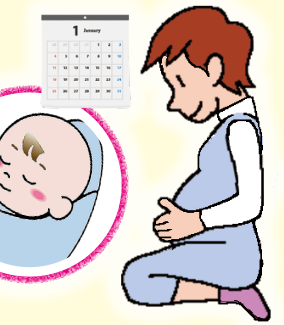
(1) In case of pregnancy
• Pregnant women (partially including female workers who are within one year after childbirth, and in such case, hereinafter referred to as “expectant or postpartum mothers”) can apply for the following:
i. Transfer to other, light operations (only during the pregnancy period)
ii. Keeping her working hours on legal working hours per week or per day basis (including when an irregular working hour system is adapted) (for expectant or postpartum mothers)
iii. Exemption from overtime work, holiday work or midnight work (for expectant or postpartum mothers)
*Employers must take the following measures:
i. Guarantee the time for health guidance and medical examinations to expectant or postpartum mothers
ii. If a female worker receives instructions from a doctor or a midwife, take necessary measures such as changing her working hours or reducing her workload so that she can follow the instructions
* If you receive instruction from a doctor or midwife, please submit the Maternal Health Management and Guidance Card to your company.
The Maternal Health Management and Guidance Card is available in English, Chinese, Portuguese and Vietnamese from the following website:
About maternity health care for female workers
https://www.mhlw.go.jp/stf/seisakunitsuite/bunya/koyou_roudou/koyoukintou/seisaku05/index.html

• Employers are prohibited from engaging in the following acts:
i. Using marriage, pregnancy or childbirth as grounds for terminating the employment of a female worker
ii. Dismissing a female worker due to her marriage
iii. Dismissing or making disadvantageous treatment to a female worker by reason of her pregnancy, childbirth or applying for maternity leave before and after childbirth, etc.
* Dismissal of expectant or postpartum mothers is invalid. However, this shall not apply in the case that the employer proves that the dismissal is not caused by reasons such as pregnancy or childbirth.
Ensuring equal opportunities and treatment for men and women in employment https://www.mhlw.go.jp/stf/seisakunitsuite/bunya/koyou_roudou/koyoukintou/danjokintou/index.html

Printed page 32
PDF page 47 ↗(2) Maternity leave
• An employer shall not have a female worker work in the following periods:
i. 6 weeks before the expected date of delivery on the woman’s request (or 14 weeks in the case of multiple fetuses)
ii. 8 weeks after childbirth (this does not prevent an employer from having a woman who is at least 6 weeks postpartum work, if she requests to, in operations that a doctor has approved as having no adverse effect on her.)
(3) Childcare Leave
• Until the child becomes one year old (up to until two years old in certain cases), male and female workers can take Childcare Leave. Childcare Leave can be taken by dividing into two.
• Parental Leave refers to male and female workers taking four-week childcare leave within eight weeks after birth of a child. Other than Childcare Leave, Parental Leave can be taken by dividing into two.
• Employers are prohibited to do the following (this applies to companies receiving dispatched workers)
i. Refusing an application for Childcare Leave/Parental Leave.
ii. Treating workers in a disadvantageous manner such as dismissal due to their application for Childcare Leave/Parental Leave.
(4) Caregiver Leave
• A worker can take Caregiver Leave (Act on Childcare Leave/Caregiver Leave)
i. This is a leave in order to provide caregiving to an applicable family member requiring caregiving.
ii. Caregiver Leave can be taken in up to three periods, not to exceed 93 days in total per applicable family member.
• Employers are prohibited to do the following (this applies to companies receiving dispatched workers)
i. Refusing an application for Caregiver Leave
ii. Treating workers in a disadvantageous manner such as dismissal of workers due to their application for Caregiver Leave
For details, please contact the Prefectural Labor Bureau's Employment Environment and Equal Employment Department (Office) (or Labor Consultation Service for Foreign Workers).
* When you visit our office for consultation, we can assist you in 13 languages. (When you consult us by phone, we can only assist you in Japanese.)
https://www.mhlw.go.jp/content/000177581.pdf

Printed page 33
PDF page 48 ↗Key Point: Allowances
• Persons who meet the conditions during childcare leave are granted childbirth allowance.
See Chapter 4 3-2
• Those who meet certain conditions when taking childcare leave may be eligible to receive childcare leave benefits.
See Chapter 4 3-3 (1) and (2)
• Persons who take family care leave and meet certain conditions are granted family care leave allowance. An allowance is equal to 67% of the person’s wage before the suspension of their work and it is paid up to three times per Subject Family Member, for up to 93 days.
2-5 Resignation / Dismissal
(1) Resignation
• It is your choice to resign from a company, however, it is important to maintain some social rules when you resign.
i. Notify your supervisor know your intention to resign before you resign
ii. Notify the company of your resignation in written form
iii. Handing over your jobs to your successor

• If you decide to resign, it is necessary for you to look up the resignation procedures in your employer.
• If your employer stipulates resignation procedures in its rules of employment, you should follow the employer’s rules.
• When a worker notifies his/her intention to resign, the applicable laws and rules differ depending on whether his/her labor contract has a fixed-term or not.
Labor contract without a fixed term
• If a worker has entered into a labor contract without a fixed term, the labor contract will be terminated within two weeks after the worker notified his/her resignation.
Labor contract with a fixed term
• If a worker has entered into a labor contract with a fixed term, he/she cannot resign during the middle of the term of contract unless there are unavoidable circumstances. If one year has passed since the contract was entered into, the worker can resign anytime by notifying his/her resignation.
• In order to continue working after the expiration of the term of contract, it is necessary to enter into a new labor contract (to renew the labor contract) (See: 1-3 (2)). The renewal of a labor contract requires the consent of both the employer and the worker.
Printed page 34
PDF page 49 ↗(2) Dismissal
Dismissal
• This is a unilateral termination of a labor contract by an employer.
• If the dismissal lacks objectively reasonable grounds and is not considered to be appropriate in general societal terms, the dismissal shall be invalid. In other words, an employer cannot dismiss its workers at will.
• In addition, it is required for an employer to prescribe reasons for the dismissal (circumstances that are the basis for dismissal) in its rules of employment.
• When an employer wishes to dismiss a worker, the employer must provide at least 30 days advance notice or must pay the worker the average wages for 30 days or more (dismissal notice payment) to the worker concerned except for the cases that where business continuance has become impossible due to a natural disaster or any other compelling reason, or where the reasons for dismissal were attributable to the worker .
Termination of fixed-term employment
• If a new contract is not concluded or a current labor contract is not renewed when a fixed-term employment expires, the fixed-term employment will be terminated. (See: 1-3 (2))
• The termination of a fixed-term employment is different from dismissal, in which an employer terminates the labor contract unilaterally.
• An employer must provide 30 days advance notice for the workers below:
i. Workers whose contract were renewed three or more times.
ii. Workers who have continued to work for more than one year.
• In the following cases, an employer cannot terminate a fixed-term employment without objectively reasonable grounds or without general societal terms.
i. When a termination is recognized as dismissal because the contract has been renewed many times.
ii. When a worker reasonably assumed that his/her employment would continue.
• If the employer is not allowed to terminate a fixed-term employment, the labor contract with a fixed term shall be renewed under the same working conditions as before.
Key Point: Dismissal for the purpose of restructuring
• When an employer carried out workforce reduction due to a recession, business slump, etc., a dismissal in this case is referred to as a dismissal for the purposes of restructuring.
• Whether such a dismissal is valid or not is judged in the light of the following matters.
i. Necessity of workforce reduction
It must be based on needs serious enough to carry out workforce reduction measures in the light of employer management such as recession, business slump, etc.

Printed page 35
PDF page 50 ↗ii. Efforts to avoid dismissal
Efforts must have been made to avoid dismissal through other means, such as reassignment, recruitment of those persons who would like to resign.
iii. Rational choice of suitable persons subject to dismissal for the purpose of restructuring
The criteria for choosing persons subject to dismissal for the purpose of restructuring must be objective and rational, and their implementation must be fair.
iv. Appropriateness of dismissal procedures
The need for dismissal and its timing, scale and method must be explained to the labor union or workers to gain their understanding.
(3) Bankruptcy of the Employer
A system has been established which the government pays unpaid wages in advance on behalf of an employer under the Act on Ensuring Wage Payment, in the event the employer goes bankrupt and cannot pay wages to its workers.
Please consult with the Labor Standards Inspection Office in such case, as part of your unpaid wages might be paid in advance.
(4) Employment Insurance (Basic allowance)
In case of unemployment
If you were covered by employment insurance and meet the conditions below, you can receive a basic allowance from employment insurance.
• Terms for being eligible to receive a basic allowance
i. Being an unemployed person
ii. A person who is capable to work and has the intention of getting a job
iii. A person who had worked at least 11 days per month or at least 80 working hours per month as the bases of wage payment for 12 months during the span of two years before he/ she left the company.
(However, if the reason for being unemployed is the bankruptcy or other circumstances of the company, or non-renewal of a fixed-term labor contract, etc., a worker can receive the basic allowance provided he/she had worked for at least 11 days per month or at least 80 working hours per month as the bases of wage payment for 6 months during the span of a one-year period before he/she left the company.)
Starting time of payment
This depends on the reason for your becoming unemployed.
i. Dismissal due to circumstances of the company, resignation due to recommendation by the company, etc.
When 7 days have passed in total since the person became unemployed after an application for job hunting (*1) was submitted and a certificate of unemployment was accepted at Hello Work (the Public Employment Security Office)
ii. Voluntary resignation
When an additional 2 months (the number of voluntary resignations shall be up to twice
Printed page 36
PDF page 51 ↗in 5 years) (*2) have passed since 7 days had passed in total since the person became unemployed after an application for job hunting (*1) was submitted and a certificate of unemployment was accepted at Hello Work.
(*1) Please check “(5) Job Hunting Activities” for Hello Work in your place of residence or job-hunting activities after application for job hunting.
(*2) In the case of the third or subsequent voluntary resignation in 5 years, 3 months should have passed.
iii. Dismissal for a serious reason that is attributed to the worker himself/herself
When an additional 3 months have passed since 7 days had passed in total since the person became unemployed after an application for job hunting was submitted and a certificate of unemployment was accepted at Hello Work.
When you receive a certificate of unemployment, make sure to check and read the reasons for your resignation of the company. This is because, if it states that you resigned the company voluntarily, even when in fact you were dismissed due to company circumstances or you merely accepted a recommendation to resign by the company, you will be at a disadvantage with regard to receiving the basic allowance.
Period of payment
This depends on the reason for your unemployment and your age. It will be from 90 days to 330 days in principle.
(5) Job Hunting Activities
You will perform job hunting activities at Hello Work or other places in order to find your next job.
You can receive the following services from the job consulting counter at Hello Work, all of those are free of charge.

i. Job consultation
They provide various types of consultation for job hunting and employment. You should consult with them first about any matter.
ii. Looking for a company for which you want to work
Hello Work has job vacancy information from a lot of companies. You can check such job vacancy information on the personal computer of Hello Work or your smart phone.
iii. Introduction to a company for which you want to work
If you find a company for which you want to work, you should visit the counter at Hello Work. A staff will give you advice on important points of the company or job hunting. He/she will also hand you an “Introduction Letter” so that you can have an employment screening interview.
iv. Support for job searching
Hello Work also provides correction guidance for application documents such as a personal history or resume, advice on interview etiquette and attitude, a mock interview, and various seminars
Printed page 37
PDF page 52 ↗Please visit the following website to check Hello Work in your place of residence:
https://www.mhlw.go.jp/content/000637894.pdf

Interpreters are available at certain branches.
https://www.mhlw.go.jp/content/000592865.pdf

If you cannot visit Hello Work, you can make a phone call to Hello Work in foreign languages.
https://www.mhlw.go.jp/content/000673000.pdf

“Checklist for Using Hello Work for Foreign Nationals” explains matters described in 2-5 in detail:
https://www.mhlw.go.jp/content/000678121.pdf

For consultation about working conditions (wages, dismissal), etc., please visit the following website:
https://www.check-roudou.mhlw.go.jp/soudan/foreigner.html

If there is any term relating to labor or social insurance of which meaning you don’t understand, you can check it with the “Multilanguage Useful Glossary for Employment Management.”

3 Health and security
3-1 Healthy and safety working environment
The Industrial Safety and Health Act is a law to ensure health and safety for workers. Employers are obliged to take necessary measures to protect workers from work-related accidents and illnesses.
(1) Contents of the Industrial Safety and Health Act
Employers have the following obligations:
• Take necessary measures to prevent dangers due to machines, instruments and other equipment.
• Conduct an annual medical checkups when an employer recruits workers or after their recruitment. (Workers have to receive a medical checkups.)
Printed page 38
PDF page 53 ↗• Conduct a stress checkup on workers and take necessary measures on job such as changing their work according to the results of the checkup. (Companies with less than 50 workers are obliged to strive to do the above.)
• Grasp the workers’ working hours objectively from the viewpoint of health management.
• Have the workers see a doctor for counseling and take necessary measures such as changing their work in case the workers are fatigued because of long working hours.
(2) Medical checkups, etc.
Under the Industrial Safety and Health Act, not only regular employees but also dispatched workers, contract employees, and part-time employees are eligible for medical checkups and stress checks, if they meet the following two conditions:
• Being employed with a contract without a fixed term (in case of a worker with a fixed-term contract, the worker must be expected to be employed for at least one year, or have been employed at least one year by renewal of the contract)
• Working for three-quarters or more of the prescribed working hours of regular workers engaged in the same type of job at the place of business per week.
(3) Face-to-face guidance by physicians
Under the Industrial Safety and Health Act, not only regular employees but also dispatched workers, contract employees, and part-time employees are eligible for face-to-face guidance by physicians, if they meet the following condition:
• Having performed overtime work or holiday work for over 80 hours a month, and being recognized to be suffering from fatigue (if they submit a request). However, those who meet the following conditions are eligible for face-to-face guidance by physicians without submitting a request:
i. R&D workers who worked overtime or on holidays for 100 hours or more per month
ii. Workers under the highly skilled professional system whose health management hours (the total of hours spent in the workplace and working hours outside the workplace) per week exceed 40 hours, where the excess hours per week have accumulated to more than 100 hours per month
Please visit the following website for consultation about workplace health and safety (Consultation and Support Office for Foreigners):
https://jsite.mhlw.go.jp/tokyo-roudoukyoku/fresc.html

Printed page 39
PDF page 54 ↗3-2 Compensation for injuries or illnesses due to work (Industrial Accident Compensation Insurance)
Workers are compensated by Industrial Accident Compensation Insurance if they incur an injury or illness due to their work.
(1) Procedure for applying for the Industrial Accident Compensation Insurance
• If you receive treatment at a hospital designated by the Industrial Accident Compensation Insurance, the treatment cost will usually be free (if you go to a hospital that is not designated, you must pay the cost initially, but you can be reimbursed by submitting a request to the Labor Standards Inspection Office).
• If you have to take a day off from work, you can receive compensation for absence from work (the business owner will pay 60% of the average wage until the third day of leave, and 80% of the amount equivalent to the average wage will be covered by the Industrial Accident Compensation Insurance from the fourth day).
• If a worker dies, Benefits (compensation), etc. for the Surviving Family will be provided to the bereaved family.
• An employer must not dismiss a worker in a period during which the worker is absent from work for medical treatment due to an injury sustained or illness suffered in the course of employment, nor within 30 days.
(2) Other reminders
• Industrial Accident Compensation Insurance covers not only injuries and illnesses at work, but also injuries, etc., incurred while commuting.
• Mental disorders such as depression due to causes such as long working hours are also covered by Industrial Accident Compensation Insurance.
• Even when you develop a disease caused by work in Japan after return to your home country, it is covered by the Industrial Accident Compensation Insurance.
• You cannot use health insurance if the injury or illness was caused by work.
• If any issues arise concerning injuries, etc., incurred during work or commuting, please consult the Labor Standards Inspection Office.
• Industrial Accident Compensation Insurance applies not only to regular employees but also to dispatched workers, contract employees, and part-time employees.
• Basically, a company that employs even one worker is required to join the Industrial Accident Compensation Insurance and pay the entire insurance premium.
Details of the Industrial Accident Compensation Insurance benefits are posted on the following website.

Printed page 40
PDF page 55 ↗3-3 Prohibition of discrimination on the basis of sex
(1) While seeking employment
• With regard to the recruitment and employment of workers, employers are prohibited from discriminating against workers on the basis of sex.
(2) After employment
• Employers are prohibited from discriminating against workers on the basis of sex, with regard to the following matters:
i. Assignment, promotion, demotion, and training of workers;
ii. Welfare (fringe benefits as provided by ordinance of the Ministry of Health, Labor and Welfare)
iii. Changes in type of job or employment status
iv. Encouragement of retirement, mandatory retirement age, dismissal, and renewal of the labor contract
• Employers are prohibited from using the fact that a worker is a woman as a basis for engaging in differential treatment in comparison to men with respect to wages.
For details, please contact the Prefectural Labor Bureau's Employment Environment and Equal Employment Department (Office) (or Labor Consultation Service for Foreign Workers).
* When you visit our office for consultation, we can assist you in 13 languages.
(When you consult us by phone, we can only assist you in Japanese.)
https://www.mhlw.go.jp/content/000177581.pdf

3-4 Harassment prevention measures
Employers are required to take necessary measures, including developing necessary systems, to give advice to workers and cope with the problems of workers, so that the working conditions of workers will not be harmed by reason of the following types of harassment; (iv. Power harassment is an obligation to make efforts for small and medium-sized enterprises until March 31, 2022.)
i. Sexual harassment;
ii. Harassment related to pregnancy, childbirth, etc.
iii. Harassment related to childcare and nursing care leave, etc.
iv. Power harassment (*)


(*) Harming the workplace environment by behavior that goes beyond the level needed for business with taking advantage of superior positions in a relationship as background.
Printed page 41
PDF page 56 ↗The Prefectural Labor Bureau's Employment Environment and Equal Employment Department (Office) or Consultation Counter on General Labor Matters have been accepting consultations.
* When you visit our office for consultation, we can assist you in 13 languages.
(When you consult us by phone, we can only assist you in Japanese.)
(Prefectural Labor Bureau's Employment Environment and Equal Employment Department (Office))
https://www.mhlw.go.jp/content/000177581.pdf

(Consultation Counter on General Labor Matters)
https://www.mhlw.go.jp/general/seido/chihou/kaiketu/soudan.html

Our leaflet on anti-harassment measures is available in 13 languages at the following website.
https://www.mhlw.go.jp/stf/seisakunitsuite/bunya/koyou_roudou/koyoukintou/seisaku06/index.html

3-5 Guidelines for Foreign Employee Management
• For foreign workers who are currently working in Japan in professional or technical fields as well as those wishing to work in Japan in the future, it is necessary to ensure fair treatment and establish an environment where they can demonstrate their full potential.
• The “Guidelines for Employers to Improve the Management of Employment of Foreign Workers” (the “Guidelines for Foreign Employee Management”) set out the rules for employers to take appropriate measures to improve employment management of foreign employees and support them to find a new job.
• Hello Work provides advice and guidance based on the guidelines when they visit employers hiring foreign workers.
Guidelines for Foreign Employee Management
https://www.mhlw.go.jp/content/000601382.pdf

Pamphlet concerning the rules for employing foreign workers
https://www.mhlw.go.jp/content/001261967.pdf

Consultations regarding labor matters are accepted at Consultation Counter on General Labor Matters. You can also inquire about the contents described in i to iii when you cannot find the inquiry destination for such contents. The office can assist visitors who come for consultation in 13 different languages. (Telephone consultation is available in Japanese only.)
https://www.mhlw.go.jp/general/seido/chihou/kaiketu/soudan.html

Printed page 42
PDF page 57 ↗4 Social Insurance and Labor Insurance
Social insurance and labor insurance are systems in which money (insurance premiums) are publicly collect from workers and/or companies and provide to workers when they encounter events such as loss of employment, injury, and death, so that workers can prepare for various life risks.
4-1 Health insurance / National health insurance
Health insurance / National health insurance (Refer to Subsections 2-1 and 2-2 in Section 2 of Chapter 6) provide necessary medical benefits or allowances to workers in cases where workers or their family have matters of such as the following:
i. When they have an injury or illness,
ii. When they have given birth, or
iii. When they died.
4-2 National pension / employees’ pension insurance
National pension and employees’ pension insurance (refer to Subsections 1-1 and 1-2 in Section 1 of Chapter 7) provide insurance benefits to workers for a lifetime in case they reach old age, suffer from physical disability, or die.
4-3 Long-term care insurance
Long-term care insurance is a system to support elderly and other people who need long-term care by society as a whole.
Refer to Section 2 of Chapter 7, Long-Term Care Insurance.
4-4 Employment insurance
The employment insurance system (refer to Subsection 2-5, (4)) provides unemployment benefits, etc., to unemployed workers to ensure theirliving and promote their employment.
(1) Persons eligible for employment insurance
i. In principle, persons who fall under the followings are eligible for employment insurance.
• Workers who have prescribed working hours of 20 hours or more per week; and
• Workers who are expected to be employed at least 31 days.
Printed page 43
PDF page 58 ↗ii. Persons who are considered eligible based on i) are eligible for employment insurance regardless of the size of the business establishment.
iii. Persons who are considered eligible based on i) are eligible for employment insurance whether they are dispatched workers, contract employees, or part-time workers.
(2) Payment of premiums
i. The company has the responsibility of enrolling its workers in the employment insurance system.
ii. The payment of premiums is shared by both the workers and the company.
Employment insurance
https://www.hellowork.mhlw.go.jp/insurance/insurance_summary.html

4-5 Industrial Accident Compensation Insurance
Industrial Accident Compensation Insurance (refer to 3-2) is a public system in which the government provides necessary insurance benefits in the following cases;
i. Where workers incurred injury, illness or death due to their job (employment accidents); and
ii. Injury, illness, or death of workers who are employed by multiple companies, etc. (accidents due to multiple job causes)
iii. Where workers incurred accidents on their way to work (commuting accidents).