Government handbook · original text
Daily rules and customs
7th edition · rules as of October 2024 · the latest in English. A newer 8th edition ↗ exists in Japanese only.
Reproduced from the Immigration Services Agency, Guidebook on Living and Working, 2025 edition, under the Government of Japan Standard Terms of Use; the PDF is the authoritative version: open the PDF ↗
Our guides for the same procedures
The handbook is the official background, as of October 2024. These guides turn it into current steps, checked against today’s official pages.
- Bank accounts in Japan: opening, using and closing yoursOpen an ordinary deposit account as a foreign resident, keep it usable when your stay is renewed, send money abroad legally, and close it before you leave.
- Utilities in Japan: setting up electricity, gas and waterStart electricity, gas, water, a cell phone and home internet when you move into a home, and stop them when you leave. Apply before you move in.
- Garbage and neighborhood rules in Japan: everyday essentialsThe everyday rules for sorting and putting out garbage and living alongside neighbors, and how to find the rules your municipality sets.
- Public facilities in Japan: libraries, baths and transportHow to use libraries, community and sports facilities, trains, public baths and lost property in Japan, and the smoking, age and bicycle rules.
- Bringing a dog or cat to Japan: preparation and quarantineBring a dog or cat into Japan without a long quarantine. Notify the Animal Quarantine Service at least 40 days before arrival.
- Consumer problems in Japan: contracts, scams and cancellationCancel a contract by cooling-off within 8 or 20 days, in writing or by email, and call 188 for help with fake bills and other problems.
- Legal advice in Japan: Houterasu eligibility and costsGet a free lawyer consultation from Houterasu and a no-interest loan for lawyer's fees, if your income and assets are within the limits. Call 0570-078377.
- Reporting crime in Japan: emergency and police consultationCall 110 in an emergency or #9110 if it is not urgent. Report a theft, crime or lost property at a police box, and find help as a crime victim.Urgent
- Japan public holidays in 2026 and 2027: dates and closuresJapan's national holidays for 2026 and 2027: 18 holidays in 2026 and 17 in 2027, and what they mean for offices, banks and work.
- Drug laws in Japan: cannabis, CBD and controlled medicinesWhat Japanese law bans for cannabis, CBD, narcotics and stimulants. Using cannabis has been an offense since December 12, 2024, with up to 7 years.
- Registering a dog in Japan: tags and rabies vaccinationsRegister your dog at the municipal office within 30 days, give it a rabies shot every year and keep both tags on the dog.
- Mobile and SIM plans in Japan: prices, ID and payment comparedEight low-cost mobile plans with a Japanese number compared on price, first-year cost, ID, payment, period of stay and English support.
Ask about daily rules and customs
Answers from this chapter’s guides and its sources onlyOriginal text, page by page
This is an unofficial HTML reproduction of the official PDF, made by Foreigners in Japan. The PDF is the source: if a table, list or picture looks wrong here, or you need the exact layout, open the original page.
Printed page 127
PDF page 142 ↗Chapter 12 Daily rules and customs
1 Life rules
1-1 Garbage
(1) Basic rules for garbage disposal
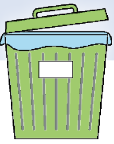
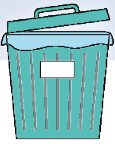
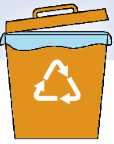
When you dispose of garbage, you have to observe the following rules:
• Comply with the garbage sorting rules, pick-up sites and days; and
• Follow the rules set forth by the municipal government in your area.
* In general, you must put your garbage bags outside on the morning of the collection day.
* The wrong kind of garbage or garbage bags placed outside of the designated site will not be collected.
* In some areas, you have to purchase trash bags designated by the local government and put your garbage in them.
Garbage sorting example (Follow the rules stipulated by your municipality)
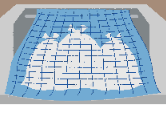
| Burnable waste | Kitchen waste and paper, etc. |
|---|---|
| Non-burnable waste | Broken ceramics, glasses, metal, etc. |
| Recyclable waste | Bottles, cans, plastic bottles, newspapers, books, plastic containers, cartons, etc. |
| Oversized garbage A fee may be charged for disposal and recycling | Furniture (tables and chairs, etc.,) bicycles, bed mattresses, etc. |
| Home Appliance Waste A fee may be charged for disposal and recycling | Air conditioners, TVs, refrigerators, freezers, washing machines and clothes dryers, etc. |
Printed page 128
PDF page 143 ↗Key Point: Used cooking oil
Used cooking oil must not be poured down the kitchen drain. Please put away used cooking oil in accordance with the rules of the municipalities you reside, after putting some paper towel in the pan to absorb the oil or curding such oil by using a coagulant etc.
Key Point: Home Appliance waste
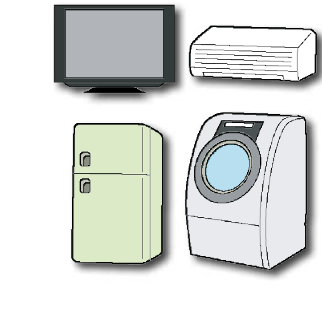
When you replace or dispose of the home appliances listed below, you need to pay a recycling fee and a collection and transportation fee:
• Air conditioners;
• TVs;
• Refrigerators and freezers; and
• Washing machines and clothes dryers.
Further, when you dispose of those, you need to ask a business operator who has been approved for collection and transportation. If you have no idea which business operator you should ask, please contact the local government of your municipality.
Payment and collection
i. When replacing with new appliance
• The shop where you purchase a new one
Each shop has its own collection policies. Ask for details at the shop where you will purchase a new appliance.
ii. Not replacing but disposal only
• The shop where you have purchased the appliance you wish to dispose of
If you do not remember where you have bought an appliance, ask your local government for help.
(2) Illegal dumping
Do not recklessly dump waste at any non-designated site.
It is against the law to do so, and you may be punished.
Observe the garbage-sorting rules of the municipality in which you reside.
Many municipalities have regulations that do not allow the littering of streets with cans and cigarette butts. Doing this can be subject to administrative or criminal penalty, so never do it.
Printed page 129
PDF page 144 ↗1-2 Making Noise
Japanese people tend to think that loud sounds and voices bother others.
• Be careful that loud voices, parties, TV and music might bother your neighbors.
• Be careful not to make a lot of noise when you use a washing machine,or a vacuum cleaner, or taking a shower early in the morning or late at night.
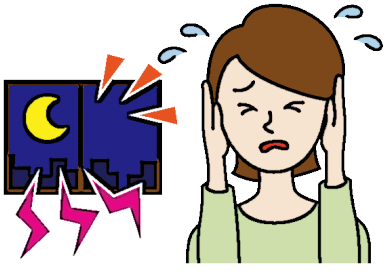
• In condominium or apartments, refrain from talking loudly or making a lot of noise.
1-3 Restroom
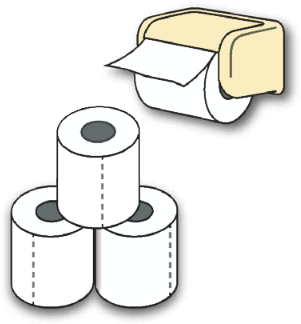
Japanese restrooms
• Be sure to use only the toilet paper that is in the restroom.
• Used paper should be flushed.
→ In some countries, used paper is deposited in a trash bin in the restroom. However, in Japan, it can be flushed away: if the paper in the restroom is properly used, the pipe is rarely clogged with paper.
• There are many buttons in public restrooms in department stores and at stations, etc. The flushing button normally looks like this: 流す (FLUSH) .
1-4 Mobile phone use
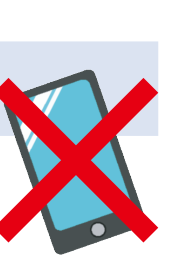
• Do not use a mobile phone while walking to avoid injuring yourself or other passengers.
• It is prohibited by law to use a mobile phone while driving or riding a bicycle.
1-5 On a bus or train
In public spaces like trains and buses, please keep in mind the following:
• Speaking in a loud voice is considered to be manner violation in Japan.
• As talking on the phone on a bus or train is considered to be bad manners in Japan, please refrain from talking on the phone (as it bothers other people).
• Be sure that your music is not too loud and cannot be overheard outside of the earphones.
• When a bus or train is crowded, take care so your backpack does not bother other people.
Printed page 130
PDF page 145 ↗1-6 Hot springs and bathhouses
• There are rules at public baths like hot springs and bathhouses.
• Wash your body before getting in the bathtub.
• Do not put a towel in the bathtub.
• Do not use soap and shampoo in the bathtub to wash your body and hair.
• Persons with tattoos may not be allowed to enter public baths.
1-7 Prohibition signs
There are signs to indicate that something is forbidden.
This is the basic sign
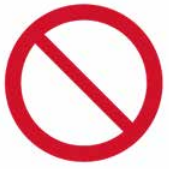
Obey these signs in the area they are placed.
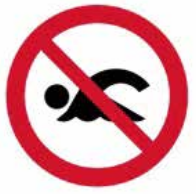
“Don’t swim.”
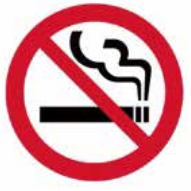
“Don’t smoke.”
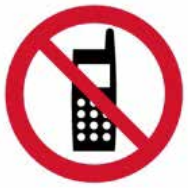
“Don’t talk on the phone.”
Printed page 131
PDF page 146 ↗2 Prevention of infectious diseases
In Japan, infectious diseases such as cold or influenza sometimes break out in winter when the air is especially dry, as well as an unprecedented infectious disease caused by new viruses sometimes emerges. In this section, basic precautionary measures to prevent the spread of infectious diseases are provided. When any infectious disease is prevalent, each person should make sure the following:
2-1 Hand washing
It is effective measures to wash your hands with running water and soap in order to physically remove viruses sticking to your hand or finger. You should frequently wash your hands upon returning home, before and after cooking, before meals, etc. The order of steps for hand washing is as follows:
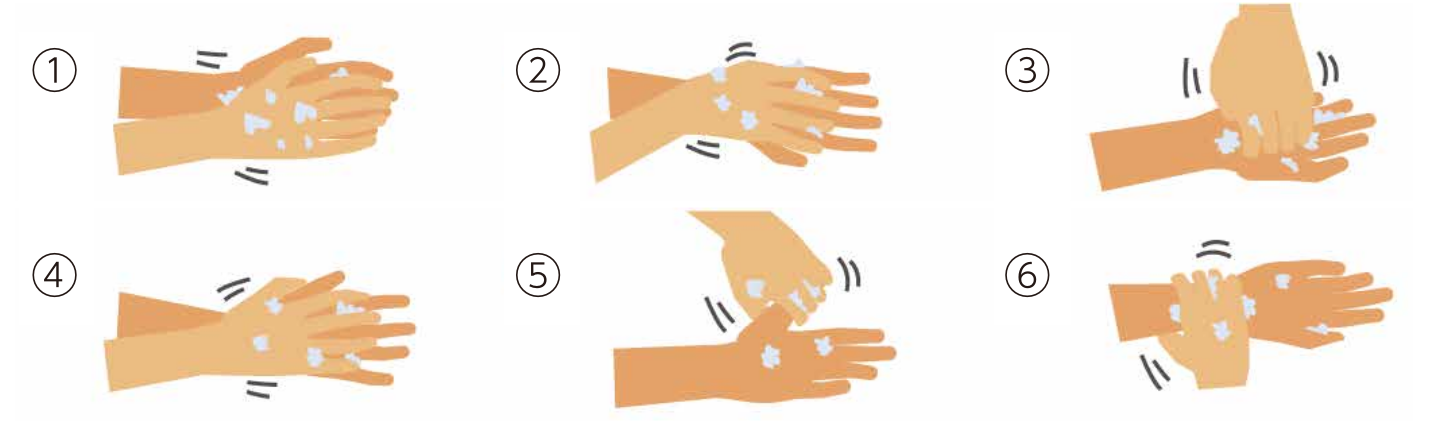
Text from this illustration: Hand-washing steps 1 to 6, source page 146
①
②
③
④
⑤
⑥
i. After thoroughly wetting your hands with running water, apply soap and rub the palms well.
ii. Rub the back of your hands up and down.
iii. Thoroughly rub the fingertips and nails.
iv. Wash between your fingers.
v. Twist and wash your thumbs with the palms of your hands.
vi. Don’t forget to clean your wrists.
* After cleaning with soap thoroughly, rinse with water and wipe dry with a clean towel or paper towel.
Printed page 132
PDF page 147 ↗2-2 Coughing manners
“Coughing manners” mean covering your mouth and nose with a mask, a tissue, a handkerchief, a sleave, the inside of your elbow, etc. when you cough or sneeze, in order to avoid infecting others. You should observe the following manners when you have symptoms such as coughs or sneezing.
• Wear a mask and cover your mouth and nose.
• Cover your mouth and nose with a tissue or handkerchief if you do not have a mask.
• If you suddenly cough or sneeze, do so in your elbow or inside your sleeves of jacket.
It is also important to wear a mask correctly. You should wear a mask in the following steps.
i. Ensure both your nose and mouth are covered.
ii. Place the rubber string over your ears.
iii. Cover up to your nose so there are no gaps.
2-3 Humidity
When the air is dry, the defensive function of respiratory tract mucosa weakens, which makes you vulnerable to infectious diseases. Particularly, when you are inside the room in which the air is likely to be dry, the use of humidifiers to keep the humidity constant (50 to 60%) is effective.
2-4 Rest and nutrition
In order to enhance body resistance, you should try to take enough rest and have a well-balanced diet on a daily basis.
2-5 Going out
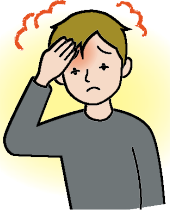
When infectious diseases that spread through droplets are prevalent, wearing a mask is considered an effective preventive measure. It is especially important for elderly people, those with underlying conditions, those undergoing cancer treatment, pregnant women, and those in poor health to take precautions to prevent infection.
Be especially careful during times when infectious diseases are prevalent and when entering crowded places.
Printed page 133
PDF page 148 ↗3 Lifestyle necessities
3-1 Community life
(1) Community groups (Residents’ association and neighborhood association)
In Japan, community members voluntarily form groups with the purpose of trying to make their community a safe and comfortable place to live in through organizing activities together. Funds for activities are raised by community members.
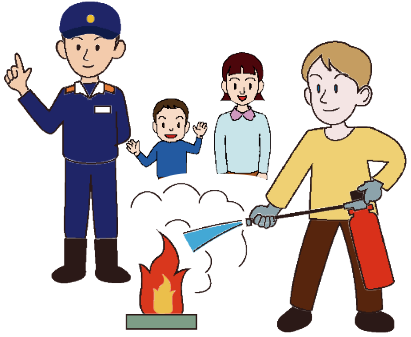
Main activities (examples)
• Emergency drills for earthquakes and fires
• Traffic control for students on school routes
• Caring for the elderly and persons with disabilities
• Circulation of a notice from local government
• Event organization, such as summer festivals and school sports festivals, to deepen relationships among members.
For details, please contact your local municipal office.
(2) Relationship with your neighbors
• Talking to your neighbors, taking part in community activities help to have a good relationship with your neighbor.
• It helps avoid having trouble with them and you can exchange useful local information. You can help each other in emergencies.
3-2 Crime Prevention
Bear in mind the following to prevent crimes such as theft and sexual assault, etc.
• Lock your windows and doors every time you leave home;
• When you park a car, a motorcycle or a bicycle, make sure to lock it;
• When you carry valuable items, including a wallet or handbag, keep an eye on them;
• Try not to walk in dark streets or other deserted places at night; and
• If you are uncertain about anything about crime prevention, consult at a nearby police station.
Printed page 134
PDF page 149 ↗3-3 Utility services
(1) Electricity
Start using electricity
When you wish to use electricity, here are the steps to follow:
i. Determine the date you want to start using the electricity service.
ii. Subscribe with a electric supplier in your area over the telephone or online.
iii. Flip the switch “on” on the circuit breaker on the service start date.
The provider may visit your residence depending on the contract and your housing facilities. In those cases, notice of this will be given to you.
Electricity bills and payment methods
• Various plans are offered by energy providers to meet users’ needs. You can choose one that is suitable for you.
• Basically, bills are determined by your usage. However, the portion of the “basic fee” is a fixed amount that you pay every month regardless of how much electricity you use.
• Bills are payable by automatic bank withdrawal, by paying in cash at a convenient store or a bank, or with a credit card.
* Your electricity usage is checked by your provider once a month by reading the meter situated outside of your residence either locally or remotely.
* Users are notified of their usage and charges by the provider every month (a usage notification is sometimes provided on the web).
* The service plan you have chosen can be confirmed in the document (sometimes provided on the web) provided by the electric power company when signing a contract.
Cancellation
When you wish to stop using electricity, the followings are the steps to follow:
i. Determine the day that service will end.
ii. Unsubscribe from the electricity supplier over the phone or online.
Generally speaking, the supplier will not visit you on the day when you cancel the service. However, there may be cases where they visit because the electric meter cannot be read from outside. In such cases, notice will be given by the provider.
In order to avoid problems for the next tenant, please be sure to complete the necessary contract termination procedures well in advance of your move-out date.
Please visit the following website for consultation if you have any problems with sales activities by or contract with an electric power company.
https://www.emsc.meti.go.jp/general/consult.html
* They do not provide information on the details of individual contracts with electric power companies or billing statements. Please contact the electric power company with which you have a contract.
In addition, they do not provide mediation or arbitration services between consultants and businesses.
Printed page 135
PDF page 150 ↗(2) Gas
Types of gas
• There are several types of gas with different components and combustion characteristics. However, City gas (13A) and LP gas are the most popular ones for homes.
• Choose a home appliance compatible with the gas type being used.
* It is dangerous to use appliances that are not compatible with the gas in use. Incorrect usage may cause fire or incomplete combustion. When using gas, open windows for ventilation.
If you smell gas while using gas appliances, immediately stop using the gas, open windows for adequate ventilation, and do not use lighters or other sources of ignition. Do not touch electrical switches. Contact your gas company immediately.
Start using gas
• When you wish to use gas, the followings are the necessary steps to follow:
i. Determine the date you want to start using gas service.
ii. Subscribe with a gas company in your area over the telephone or online.
* The provider will visit you on the date your service will start. They will check your facilities, explain how to use gas appliances and then will start providing you with gas.
Gas bills and payment methods
• Various plans are offered by a gas company to meet users’ requirements. Choose one that is suitable for you.
• Basically, bills are the total amount of the base rate and your usage. You have to pay the bill every month.
• Bills are payable by automatic bank withdrawal, by cash at a convenient store or a bank, or with a credit card.
* The gas plan you have chosen can be confirmed in the document (sometimes provided on the web) provided by the gas company when signing a contract.
Cancellation
• When you wish to stop using gas, here are the steps to follow:
i. Determine the cancellation date.
ii. Unsubscribe with the retailer over the phone or online.
* It is advisable to tell them your customer number, which is printed on your monthly charge slip (sometimes provided on the web).
On the cancellation day, the provider will come to stop the gas meter. If the meter is situated in a location to which they do not have access, the gas user or someone else acting on their behalf need to be present.
In order to avoid problems for the next tenant, please be sure to complete the necessary contract termination procedures well in advance of your move-out date.
Printed page 136
PDF page 151 ↗Please visit the following website for consultation if you have any problems with sales activities by or contract with a gas company.
https://www.emsc.meti.go.jp/general/consult.html
* They do not provide information on the details of individual contracts with gas companies or billing statements. Please contact the gas company with which you have a contract.
In addition, they do not provide mediation or arbitration services between consultants and businesses.
(3) Water
Start using water
When you wish to start using water after moving into a new residence, you need to sign up for water supply bureau or water supply business in your municipality beforehand.
For details, please contact your local municipal office.
Water bill and payment methods
Water bill is charged and paid as follows:
i. Water supply charges are calculated by the water supply business in your municipality. The business checks your usage at the meter and charges you accordingly.
ii. Bills are the total amount of the basic charge and your usage. Basic charge is calculated according to the type of size your supply pipe. The bigger the diameter is, the higher the charge becomes. On the other hand, your usage varies every month. The more you use, the higher your bill becomes.
iii. Payment methods differ according to the businesses. As a basic rule, you can choose from automatic bank withdrawal, cash payment at a convenience store or a bank, etc.
3-4 Mobile phones
(1) Mobile phone contract
• Your identification must be verified when signing a contract.
• Your identification can be verified by the following methods:
i. To present official documents (identification documents) that include your name, date of birth and current address to the mobile phone operator.
ii. To provide a copy of such documents to the mobile phone operator by mail or online.
Printed page 137
PDF page 152 ↗• Following is a list of valid identification documents:
i. Residence Card;
ii. Driver’s license;
iii. Individual Number Card; or
iv. Passport (only when it has your current address).
• If you are underage, all the documents listed below are required:
i. Identification document; and
ii. A consent letter from your parents or guardian.
• For a bill payment, you need to prepare one of the following:
i. A credit card;
ii. A bank card for a Japanese bank; or
iii. A bankbook for a Japanese bank.
• Some mobile carriers provide multilingual information online and at stores.
• You can inquire beforehand about services and the documents required for a contract.
(2) Warnings for using services for mobile phone contracts
• There are malicious brokers who offer to enter into a mobile phone contract for you but use the contract for criminal purposes.
• If you ask somebody to make a contract for you, check it yourself as well.
• It is prohibited by law to transfer a contracted cell phone without the consent of the mobile phone operator. If you break this law, you will be prosecuted.
In the event that you will no longer be using your mobile phone due to reasons including returning to your home country, please contact your mobile phone provider to cancel or transfer service.
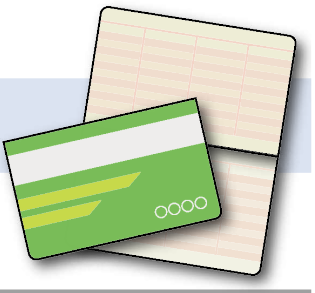
3-5 Bank Account
(1) How to open a bank account
• You can open a bank account at a bank branch. Depending on the bank, you may also be able to open a bank account by mail, smartphone app or PC. A cash card is generally sent to your home address later.
• Present the following items when opening a bank account:
i. Identification document (e.g. Residence Card);
ii. Seal (Hanko) (some banks accept signatures);
iii. Employee ID card or Student ID card (If you do not have any of them, please go to the bank with someone in your workplace or at school.)
Printed page 138
PDF page 153 ↗• If you are not confident with communicating in Japanese, ask someone who can continuously support you (in your workplace or at school) to interpret to help you.
(2) Notify your bank immediately of any change in your address or period of stay
• If there is any change in your information such as address, period of stay, status of residence and place of work, you should immediately contact the bank with which you have an account. Besides, your bank may contact you to check if there is any change in your information.
• If you fail to contact the bank when your address, period of stay, status of residence or job is changed, or if you fail to respond to the request from the bank, your bank account may become unavailable.
(3) How to close a bank account
• If you are not going to use your bank account due to leaving Japan, etc., please close it. You can close your bank account at a nearby bank branch.
* It is a CRIME to sell, transfer and receive a bank account (e.g. a cash card, a book, login ID and password etc. ) If you commit this crime, you may be sentenced to imprisonment for a period of up to one year or less, or fined up to one million yen.
(4) Do not use illegal banks
• A national license is required to conduct banking business.
You must not request remittance to foreign countries by paying money to illegal banks or individuals not licensed by the Japanese Government.
• If you are unsure whether a bank is legal, please consult with someone in your workplace or at school.
(5) Other
• The Financial Services Agency has published pamphlets titled “How to Open a Bank Accounts and Send Money” (translated into 15 languages, including English and Chinese) for foreign residents planning to stay in Japan long-term, summarizing important information about using savings accounts and money transfers. Please make use of this resource.
For more details, please visit the following webpages below.
https://www.fsa.go.jp/news/30/20190411/20190411.html (Japanese)
https://www.fsa.go.jp/news/r1/20191004/20190411.html (English)
Printed page 139
PDF page 154 ↗3-6 Post Office
• The symbol for post offices and mail boxes is
 while the color of this symbol is red.
• These are the major services the Post Office offers:
i. Sending letters, postcards and parcels in Japan or to overseas (*1);
ii. Saving (*2) and remitting money, and paying public utility charges; and
iii. Life insurance sales.
*1 For inquiries regarding sending letters, postcards, and parcels, Japan Post has established a Customer Service Consultation Center (English).
Japan Post Website (English):
https://www.post.japanpost.jp/index_en.html
*2 For inquiries regarding opening an account, Japan Post has established a Multilingual Call Center. (TEL: 0570-023170)
Languages supported: English, Chinese, Korean, Vietnamese, Indonesian
Call Center Information Website:
https://www.post.japanpost.jp/bank/account/multilanguage-callcenter.html
Printed page 140
PDF page 155 ↗4 Public Transportation
4-1 IC Cards issued by railway companies
(1) General functions
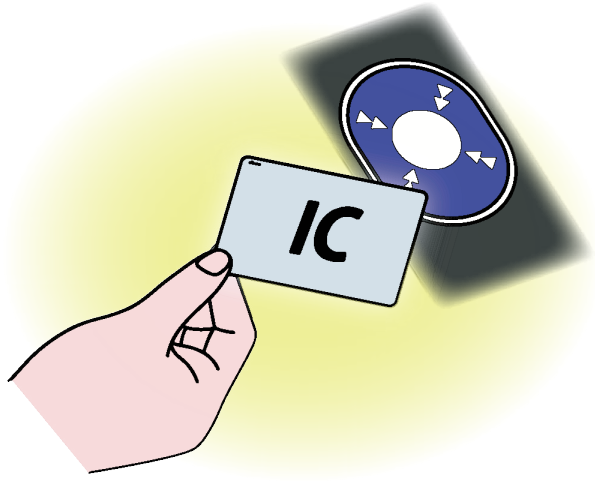
You can use IC cards issued by railway companies to pay the transportation fares of trains, subways, buses, etc. The general functions of the card are as follows:
• By charging an IC card, it is not necessary to purchase a ticket at a ticket vending machine;
• The card is available at the ticket vending machine and service counters at stations or bus service centers; and
• Fares can be discounted if they are paid with the card rather than in cash.
(2) Registered card
• The name of the card holder is printed on it.
• It is necessary to register name, phone number, date of birth and gender.
• If it is lost, it can be re-issued.
(3) Non-registered card
• The name of the holder is not printed on the card.
• If it is lost, it cannot be re-issued.
(4) Deposit
• Generally, you have to make a deposit when you purchase one.
• This deposit will be refunded when it is returned to the issuer company.
Printed page 141
PDF page 156 ↗4-2 Trains
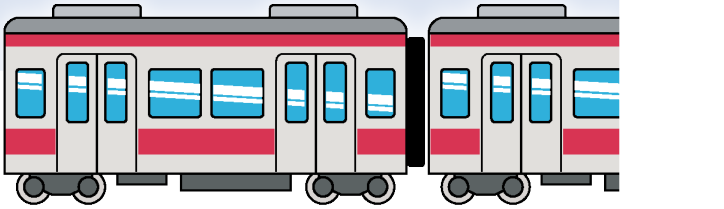
Japan has a well-developed train and subway network. Trains and subways are popular means of transportation for commuters and students.
(1) How to get on a train
The followings are the basic steps for using train services.
i. Find your destination on the train network map;
ii. Buy a ticket for your destination and insert it into the automatic ticket gate. (If you have an IC card, touch the card reader at the ticket gate with it);
iii. Follow the information on the display in the station and check the number of the platform where trains head for your destination come;
iv. Wait for trains behind the white line or yellow blocks on the platform; and
v. At your destination, exit from the ticket gate by inserting the ticket you have purchased at the departure station. (If you have touched your IC card at the departure station, touch it again at the ticket gate. The fare will be deducted from your card’s balance.)
(2) Types of ticket
| i. Regular train tickets | for ordinary trains or subways |
|---|---|
| ii. Commuting pass | This is useful for commuters and students who travel to the same destination frequently every month. Fare per travel will be more economical comparing to the regular one-way ticket. You can choose between validity periods of one, three, six months, etc. |
(3) Other tickets
When you get on an express or specially-equipped train, in addition to a base-fare ticket, you have to purchase an extra ticket as follows:
| i. Express ticket | For a bullet train or a limited express train; |
|---|---|
| ii. Reserved Seat ticket | For a reserved seat on a bullet train. It may be sold with an express ticket; or |
| iii. Green car ticket | For a higher grade Green car. |
Printed page 142
PDF page 157 ↗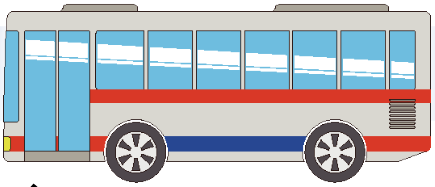
4-3 Bus
(1) Traveling long distances (Long-distance buses)
• As a rule, you need to buy your ticket before you get on a bus.
(2) To move in and around the city (Local buses)
i. When a flat fare is applicable
• Put your fare in the fare box when getting on.
• If you pay your fare with an IC card, touch the card-reader near the fare-deposit box with it.
ii. When a flexible fare applies
• Get on a bus, and pick up a ticket with a number from a small box near the door. When you get off the bus, pay the fare corresponding to the number on your ticket, which is indicated on the display above at the front.
• If you pay with an IC card, touch the card-reader twice: when getting on and getting off.